
Akal Wood Fossil Park Jaisalmer: History, Location, Timings & Travel Guide
Akal Wood Fossil Park in Jaisalmer holds a 180-million-year-old petrified forest. In fact, it proves that the Thar Desert once looked entirely different.
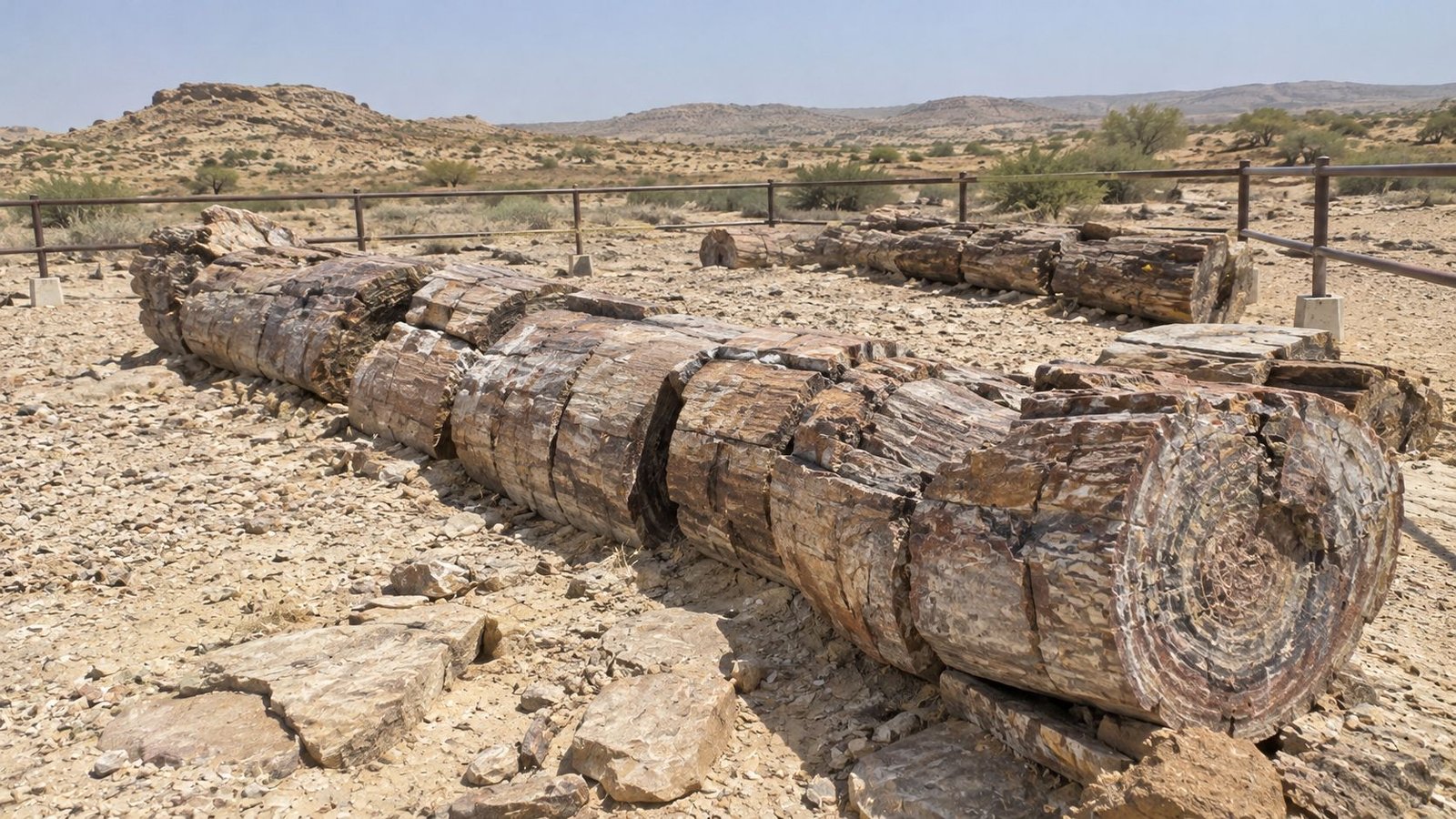
Sand dunes and dry scrubland stretch for kilometres across the Thar Desert. However, one site near Jaisalmer tells a very different story. Just a short drive from the city, the park preserves the stone remains of an ancient forest. These trees grew here roughly 180 million years ago. Since then, the region has turned into one of India’s driest areas.
For travellers who enjoy geology or natural history, Akal Wood Fossil Park offers something rare. Unlike the city’s forts and havelis, it links you directly to a prehistoric landscape. Most visitors never expect to find such a thing in the desert.
What Is Akal Wood Fossil Park?
Akal Wood Fossil Park is a protected paleontological site in Jaisalmer district, Rajasthan. It covers approximately 21 hectares. In 1972, the Geological Survey of India declared it a National Geological Monument. Since then, it has also gained recognition as a Biodiversity Heritage Site. Both titles reflect its scientific value as a record of the region’s ancient environment.
The site preserves petrified wood and fossilised tree trunks from the Lathi Formation. This geological layer dates to the Lower Jurassic period, roughly 180 million years ago. In addition to tree fossils, the site has yielded invertebrate fossils such as gastropods and ammonites. As a result, it offers a window into the marine and forested world that once existed here.
Why Is the Park Famous?
The park is famous mainly for one reason. It shows visible proof that today’s arid Thar Desert was once a very different place. During the Lower Jurassic period, forests likely grew here in a warm, humid climate near the coast. That world contrasts sharply with the dry, sandy terrain you see today. Over millions of years, sediment buried these trees. Then minerals slowly replaced their organic material. As a result, the trees kept their form in stone.
Moreover, the park belongs to what geologists call Jaisalmer’s wider fossil belt. This belt has also yielded fossils of dinosaurs and ancient sharks. Therefore, the area holds wider importance for the study of prehistoric India.

History and Geological Significance
The fossils at Akal come from the Lathi Formation of the Lower Jurassic. This places their age at approximately 180 million years. At that time, gymnosperm forests likely covered this area. Gymnosperms are non-flowering trees, broadly similar to conifers such as chir or deodar. In addition, the climate then bore little resemblance to today’s desert conditions.
Over time, geological changes buried these trees horizontally under layers of sediment. Then a process called petrification began. During this process, minerals gradually replaced the original wood tissue. As a result, the trunks turned to stone but kept much of their structure and detail. Later, shifts in the sandy basin pushed the fossilised trunks back toward the surface. Since then, wind and water erosion have exposed them in their present form. You can read more about the site on Wikipedia.

What You Can See at the Site
Numerous petrified logs and fossilised wood fragments lie scattered across the site. Some still lie horizontally, just as sediment buried them long ago. Several sources describe trunks of considerable size, with some reportedly several metres long. In addition to the trunks, the park holds fossil evidence of ancient plants and marine invertebrates. Together, these finds reflect the site’s layered geological history.
Some accounts also mention small on-site structures with extra fossil specimens. These reportedly include marine and plant fossils, along with displays on the site’s geology. However, current facilities can vary, so confirm them when you arrive.
Location on the Barmer Road
Akal Wood Fossil Park lies near Akal village in Jaisalmer district, Rajasthan. It sits along the road toward Barmer. The setting is a barren, rocky hillside typical of the Thar Desert. On the surface, however, it gives little hint of the ancient forest preserved below.
How to Reach Akal Wood Fossil Park from Jaisalmer
Reports generally put the park about 17 to 18 kilometres from Jaisalmer city, along the Barmer road. Most visitors hire a taxi or auto-rickshaw, because no regular public transport runs to the site. Since the distance is short, you can easily cover it in a half-day trip. Many travellers also combine it with other attractions on the same route.
Akal Wood Fossil Park Timings and Visitor Information
Confirm details before you go, because this guide cannot verify current hours or entry fees.
This guide cannot confirm reliable, current opening and closing hours for the park. Timings at smaller heritage and geological sites often vary and change over time. Therefore, check current visiting hours locally before you plan your trip. For example, ask the local Rajasthan Tourism office or your taxi or tour operator. Similarly, confirm any current entry fee on arrival or through local sources.
Best Time to Visit
As with most outdoor sights near Jaisalmer, the cooler months from October to March work best. Because the terrain offers little shade, the site gets very hot from April to June. Also, morning and late afternoon visits feel more pleasant than midday ones, especially outside winter. Most visits take between thirty minutes and an hour. However, the time depends on how much of the site you want to explore.
Photography at the Park
The park’s main visual draw is its large, petrified tree trunks lying across open desert terrain. The stone trunks contrast strikingly with the sandy, rocky landscape around them. For example, close-up shots reveal stone-like textures and preserved wood-grain patterns. Meanwhile, wider shots capture the barren setting that makes these forest remains so surprising. However, photography rules at the site can vary. So follow any posted signs or guidance from on-site staff.
Tips for Your Visit
- Confirm current timings and entry details locally before you set out, since these can change.
- Visit in the cooler months or early in the day, because the site offers little shade.
- Carry water and sun protection, especially outside the winter season.
- Wear sturdy, comfortable shoes for walking on uneven, rocky ground.
- Allow thirty minutes to an hour, depending on how closely you want to explore.
- Combine the trip with other stops along the Barmer road to make the most of your journey.
Places to Visit Near Akal Wood Fossil Park
The park sits along the road toward Barmer. So many travellers pair it with other stops across Jaisalmer district. If you enjoy desert landscapes, you can also visit Desert National Park or Sam Sand Dunes on the same trip. However, the city’s heritage sights, such as Jaisalmer Fort and Bada Bagh, have a different focus. For this reason, many travellers treat the fossil park as a separate stop, focused on geology rather than architecture.
Is It Worth Visiting?
For travellers who love geology or natural history, Akal Wood Fossil Park offers something truly distinct. Unlike the rest of Jaisalmer’s sightseeing circuit, it shows direct evidence of a prehistoric forest. Even more surprising, this forest lies hidden in one of India’s driest regions. Moreover, it is a quick stop that fits easily into a half-day trip. As a result, it makes a worthwhile addition for anyone who wants to see a quieter side of Jaisalmer.
Akal Wood Fossil Park FAQs
It lies near Akal village in Jaisalmer district, Rajasthan, along the road toward Barmer. The site sits roughly 17 to 18 kilometres from Jaisalmer city.
It preserves petrified tree trunks and plant fossils about 180 million years old. As a result, it proves that forests once covered today’s Thar Desert.
You can see numerous fossilised tree trunks across the site. In addition, you may spot ancient plant and marine fossils against the desert terrain.
This guide cannot confirm current official visiting hours. Therefore, check timings locally before you plan your visit.
Reports generally put it about 17 to 18 kilometres from Jaisalmer city, along the Barmer road.
Yes, especially if you enjoy geology and natural history. It is a quick, unique stop that shows a different side of Jaisalmer than its forts and havelis.
The cooler months from October to March work best. Also, visit in the morning or late afternoon to avoid the midday heat.