What Is Jaisalmer Famous For? Famous Things, Food, Culture & Experiences
- The Golden City of the Thar
- Fort, havelis and dunes
- Food, music and crafts

Jaisalmer is famous for its golden sandstone architecture, a 12th-century fort that people still live in, intricately carved merchant havelis, and the dunes of the Thar Desert at Sam. Add folk music that has travelled the world, hearty desert cooking and colourful embroidered textiles, and you have the mix that makes the city unlike anywhere else in India.
This guide explains the Jaisalmer famous things worth knowing before you go: the landmarks, the desert, the food, the culture and the crafts, plus the experiences that tie them together.
What Is Jaisalmer Most Famous For?
In one line: Jaisalmer is famous as the Golden City of the Thar Desert. Here is what that reputation rests on.
- Golden sandstone architecture. Builders used local yellow sandstone for much of the old city, so the stone gives Jaisalmer its colour and nickname.
- Jaisalmer Fort. A UNESCO-listed hill fort that is still home to families, shops and temples.
- Carved havelis. Merchant mansions with stone facades so finely worked they look like lace.
- Sam Sand Dunes and the Thar. The rolling dunes west of the city are the classic image of desert Rajasthan.
- Camel safaris and desert evenings. Rides at sunset, folk music by firelight and nights in desert camps.
- Folk music and dance. The Manganiyar and Langa musical traditions of western Rajasthan, as well as Kalbeliya dance.
- Rajasthani desert food. Dal baati churma, ker sangri and thalis built for a dry climate.
- Handicrafts and textiles. Embroidery, mirror work, stone carving and other crafts for sale in the old city markets.
Why Do People Call Jaisalmer the Golden City?
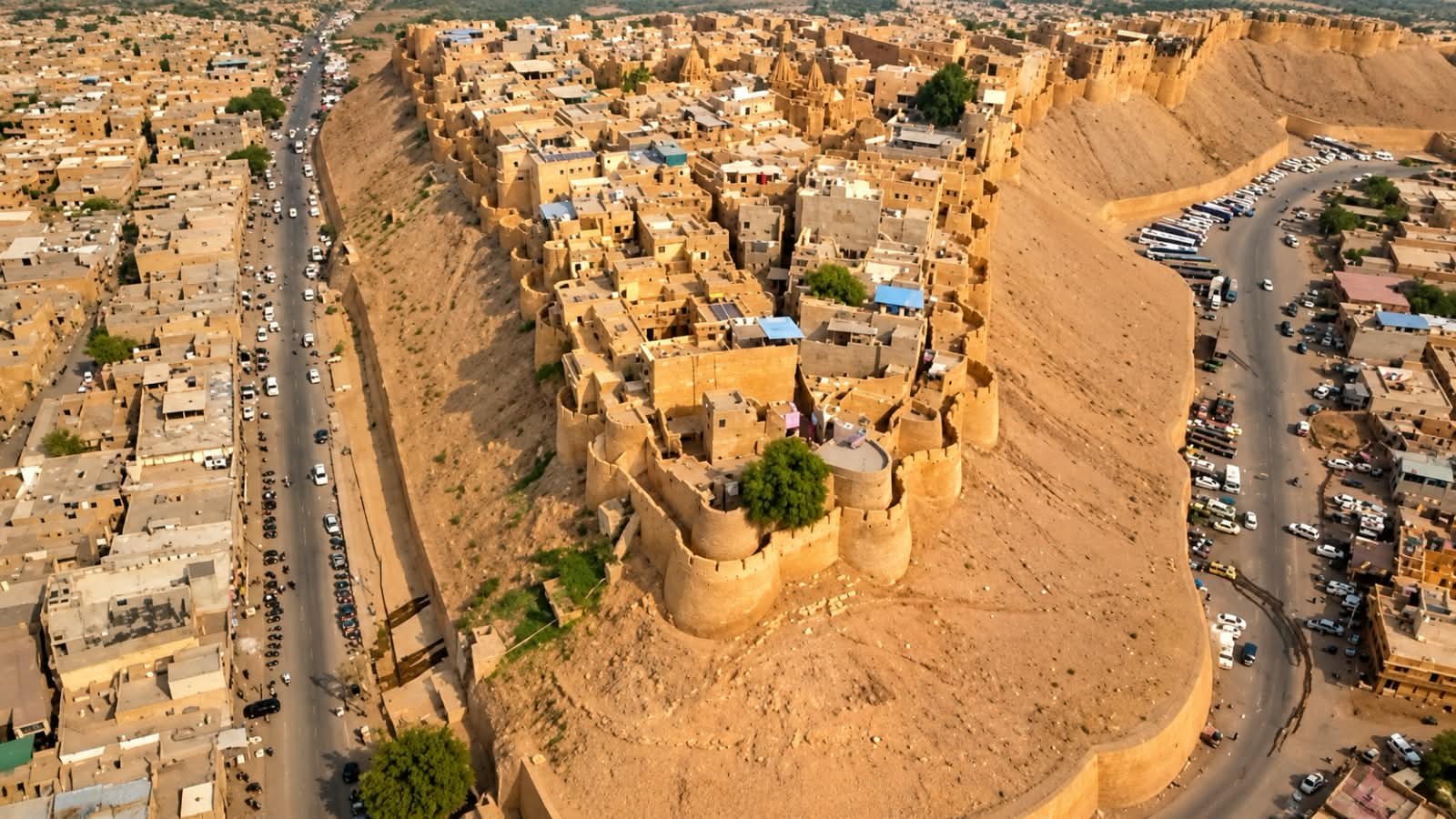
People call Jaisalmer the Golden City because of the honey-coloured sandstone across its historic core. Builders used this local stone for the fort, the havelis and many old houses and lanes. As a result, the whole skyline glows gold in strong sunlight, especially in the early morning and late afternoon.
The effect is strongest when you see the fort from a distance, rising from its hill above the town. It also shows when you walk the narrow streets of the old city, where carved balconies and walls share the same warm tone. Newer parts of the city use a wider range of materials. However, the historic centre keeps the sandstone character that earned the nickname. In fact, locals often call the fort itself Sonar Quila, the Golden Fort.
Jaisalmer Fort: The City’s Most Famous Landmark
Rawal Jaisal of the Bhati Rajputs founded Jaisalmer Fort in the mid-12th century, after moving his capital here from Lodurva. Most sources give the date as 1156. The fort stands on Trikuta Hill above the town, enclosed by sandstone walls with 99 bastions. It also served as a stronghold along the caravan routes that once crossed the Thar.
In 2013, UNESCO inscribed it as part of the Hill Forts of Rajasthan, as the group’s example of a hill fort in desert terrain.
However, what makes it famous today is that it is still a living fort. Inside the walls you will find:
- Homes and families, many of whom have lived there for generations.
- The royal palace, now a museum with viewpoints over the city.
- A group of Jain temples from the 12th to 16th centuries, famous for their detailed stone carving.
- Narrow lanes of shops, guesthouses and cafes.
Because people live here, visit with care. For example, keep noise down in residential lanes and ask before photographing residents and their homes. Also, dress modestly at the temples. Heavy visitor numbers and water seepage put real pressure on the old structure, so stay on public paths. For visiting tips, see our guide to Jaisalmer tourist places.
Famous Havelis of Jaisalmer
The havelis are the second pillar of Jaisalmer’s fame. Wealthy merchant and ministerial families commissioned these homes. As a result, they show how much skill local stone carvers brought to everyday living.
Patwon Ki Haveli
A cluster of five mansions from the first half of the 19th century, which the trader Guman Chand Patwa began. Its carved balconies, arched windows and stone screens make it the most elaborate of the group. Today, the main mansion serves as a museum of merchant life.
Nathmal Ki Haveli
A smaller haveli that a prime minister of the state commissioned. According to local lore, two brothers carved one half each. As a result, the two sides of the facade do not quite match.
Salim Singh Ki Haveli
The mansion of Salim Singh, a prime minister who served Jaisalmer’s rulers. You can easily recognise it by its upper storey, which widens out over the street, as well as its curved roofline.
Together, they show the merchant wealth that trade once brought to the city. Therefore, they rank among the main reasons architecture lovers come to Jaisalmer.
Sam Sand Dunes and the Famous Thar Desert Experience
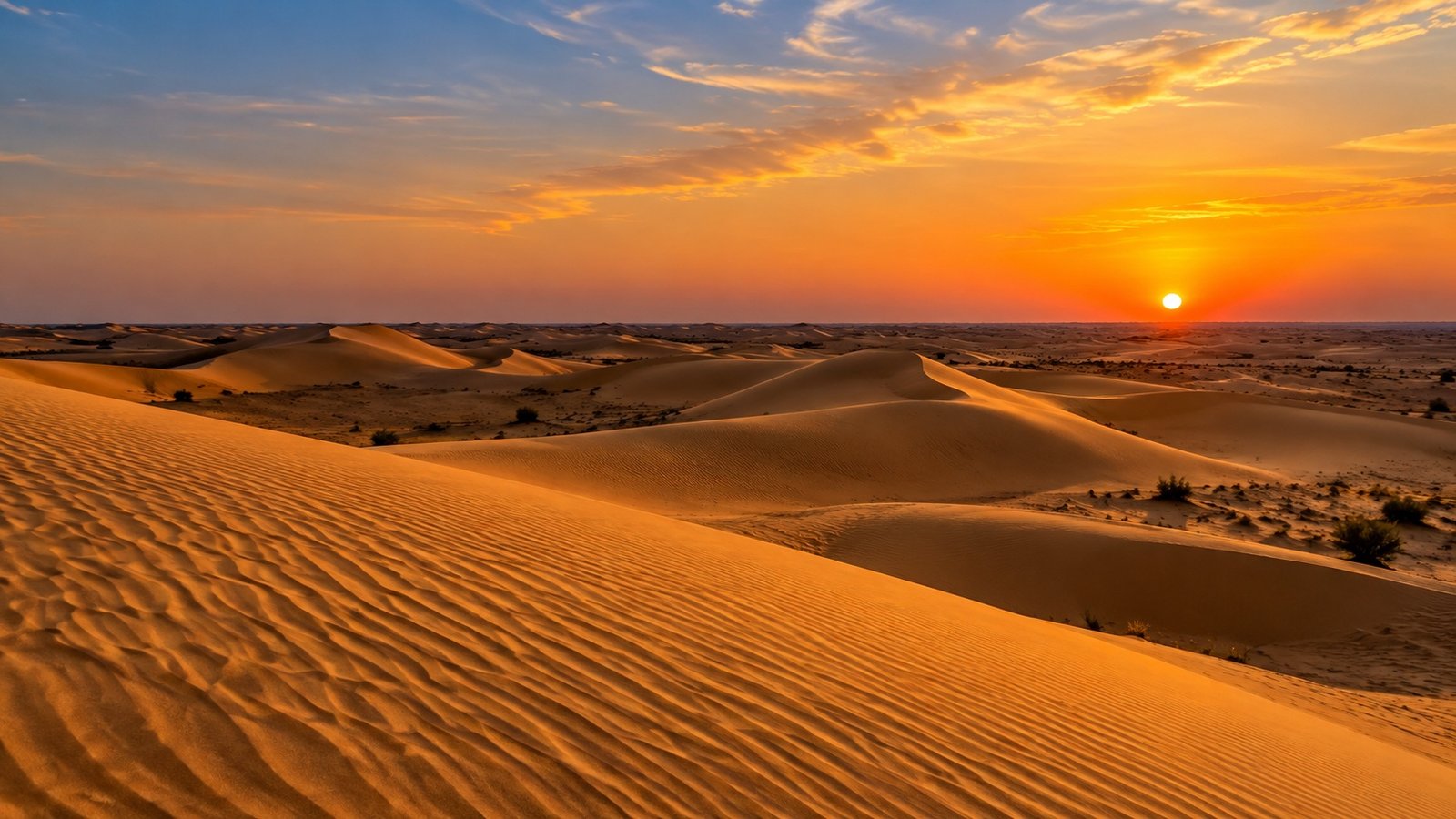
For many visitors, the desert is what Jaisalmer means. Sam Sand Dunes, about 40–45 km west of the city, is where most people experience it.
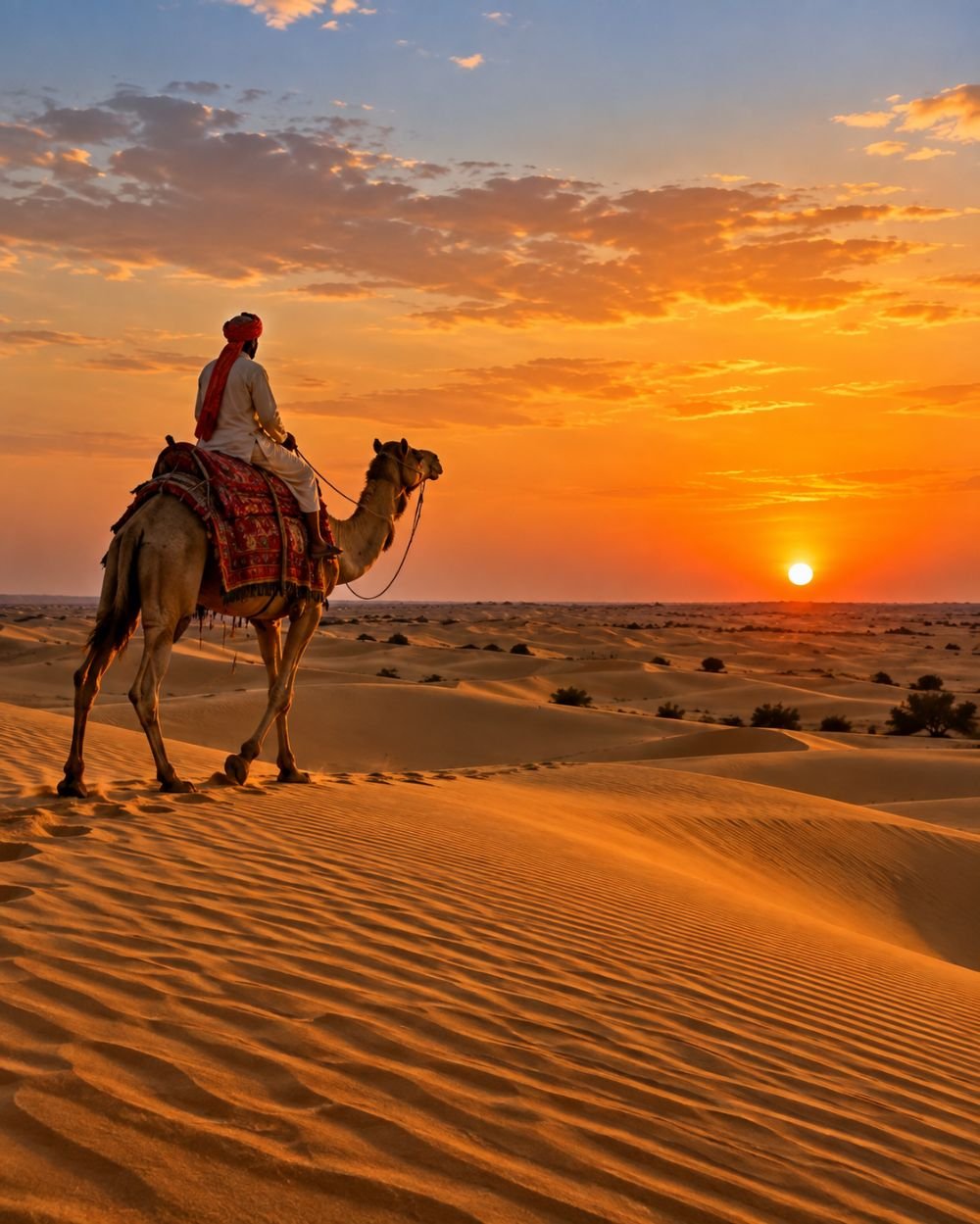
A Jaisalmer desert safari at Sam typically revolves around the evening:
- Dunes at sunset, when the sand changes colour as the light drops.
- Camel safari, the traditional way to cross the dunes.
- Jeep safari, where operators offer it, for a faster ride over the sand.
- Folk music and dance at many desert camps after dark.
- Dinner, often a Rajasthani meal, at camps that include it.
- Stargazing, when the weather and sky are clear.
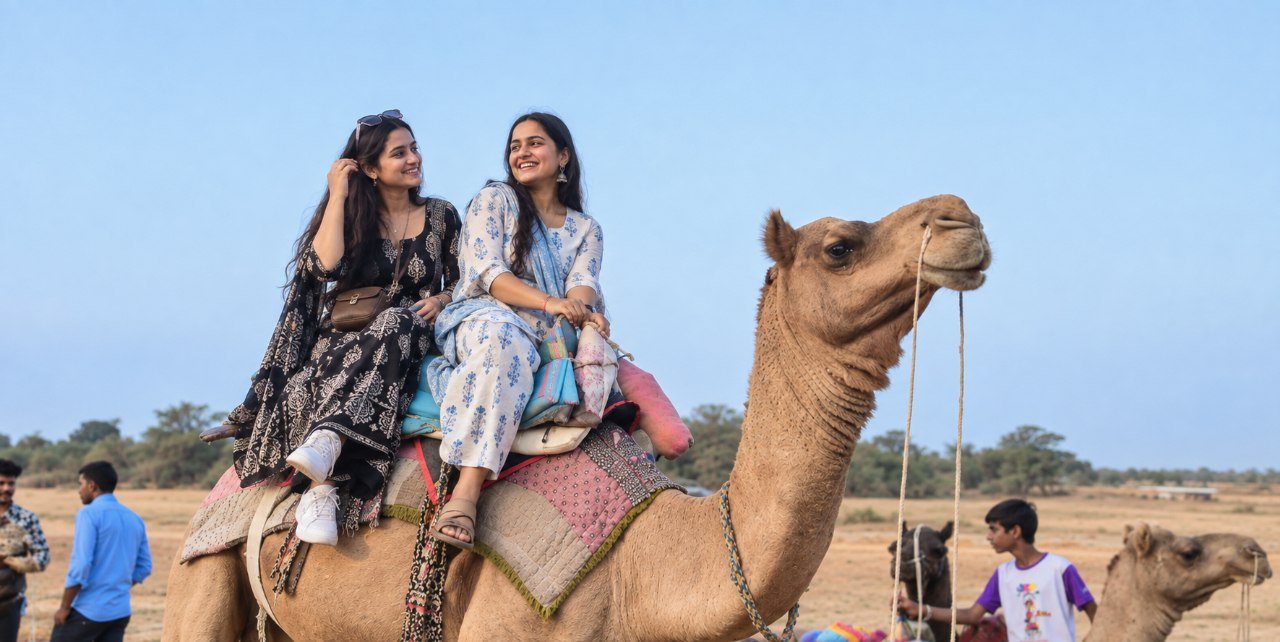
A short visit, arriving for sunset and leaving after dinner, gives you the dunes and the ride. In addition, an overnight camp stay adds the quiet of the desert at night and a sunrise over the sand. However, each camp includes different activities, meals and performances, so check before you book. Planning a camel safari? For more on the dunes, camps and safaris, see our Sam Sand Dunes guide.
What Is Jaisalmer Famous for Besides the Desert?
Beyond the fort and dunes, a few places add depth to the city’s story.
- Gadisar Lake — a historic reservoir that once supplied the city’s water, now lined with ghats, small shrines and a carved gateway. It is especially beautiful at sunrise.
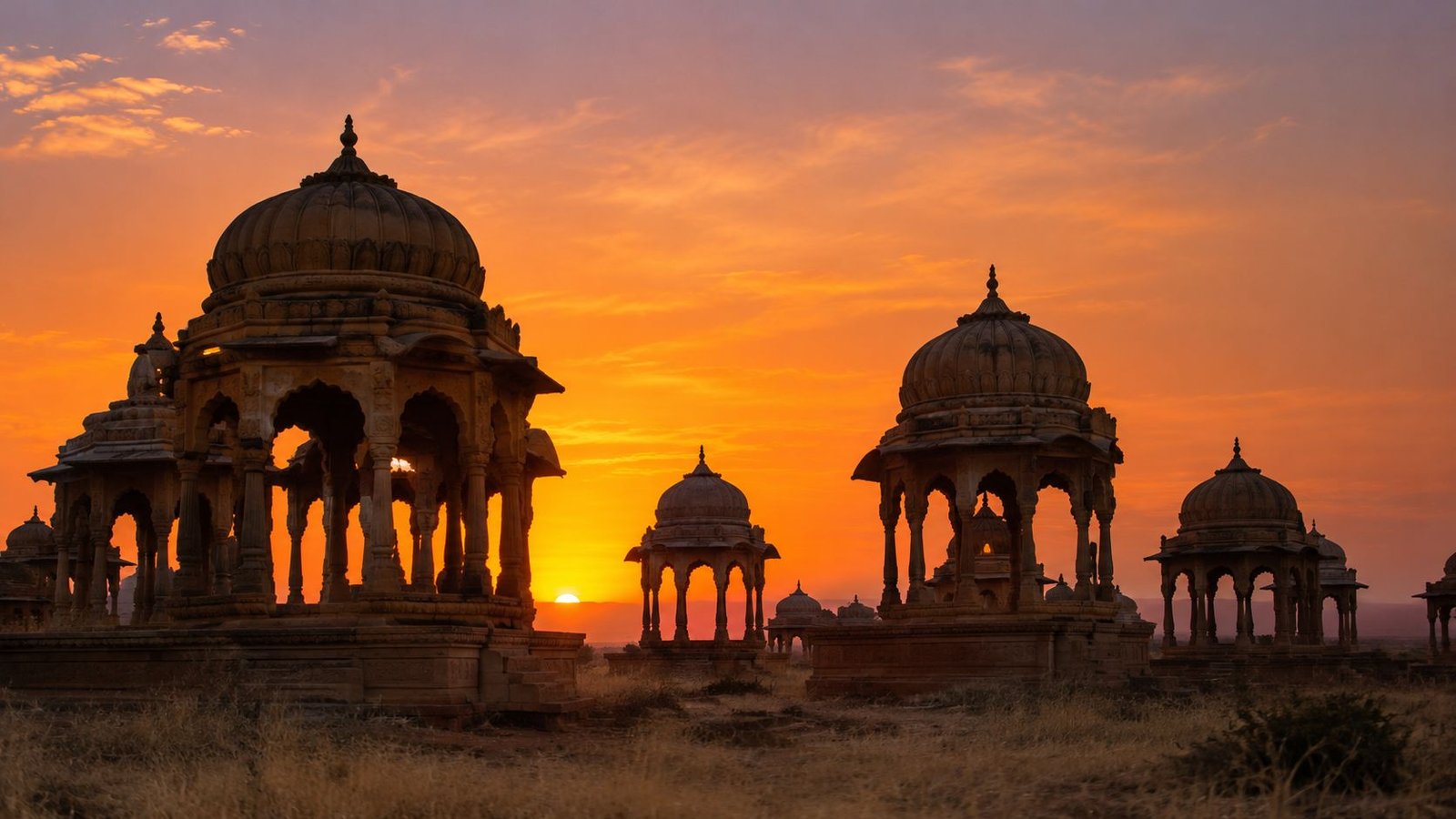
- Bada Bagh — a ridge of royal cenotaphs about 6 km north of the city. Here, carved sandstone domes stand against the open sky and modern wind turbines.
- Kuldhara — a village about 18–20 km away that its residents abandoned in the 19th century. Historical records support the desertion itself. However, the popular stories of a curse and a single-night departure are local legend, and visitors will hear several versions.
- Old-city markets and lanes — the streets below the fort, full of small shops, tea stalls and textiles, are part of the experience in themselves.
- Photography — the golden walls at sunrise and sunset, rooftop views of the fort and patterns of carved stone. Together, they make Jaisalmer one of Rajasthan’s most photogenic towns.
For the full list of famous places in Jaisalmer and how to visit them, see our guide to Jaisalmer tourist places. For excursions beyond the city, also read our guide to places to visit near Jaisalmer.
Famous Food of Jaisalmer
Jaisalmer famous food mostly reflects the cooking of the wider Rajasthani desert. These dishes use little water and fresh produce, and they keep well in the heat. Few of them are unique to the city. Still, you will find them cooked well here.
- Dal baati churma — baked wheat balls (baati) served with lentils (dal) and a sweet crumbled wheat mix (churma), usually with ghee. A Rajasthan-wide classic.
- Gatte ki sabzi — gram-flour dumplings in a spiced yogurt-based curry, typical of western Rajasthan.
- Ker sangri — a desert speciality of ker berries and sangri beans from the khejri tree, cooked with spices. In fact, no dish links more closely to the Thar landscape.
- Rajasthani thali — a platter with several of these dishes, breads such as bajra roti, chutneys and a sweet. As a result, it is the easiest way to try many flavours at once.
- Snacks and sweets — pyaaz kachori and mirchi vada are popular across Rajasthan. Meanwhile, local sweet shops sell regional specialities, so ask what they make locally.
Recipes, spice levels and quality vary between restaurants. So ask staff for recommendations.
Tips for different diets
- Vegetarians eat well here, because much traditional Rajasthani food is vegetarian.
- If you prefer less spice or less ghee, ask; many kitchens can adjust.
- Many kitchens can also prepare Jain or no-onion, no-garlic meals on request, so ask in advance.
- Allergies and intolerances: wheat, gram flour, dairy and nuts are common ingredients, so explain your needs clearly.
- Drink bottled or filtered water and choose busy food stalls with high turnover.
Jaisalmer’s Culture, Folk Music and Traditions
Culture is not a side attraction in Jaisalmer. Instead, it is part of daily life and of what visitors remember most.
- Folk music. Western Rajasthan, including the Jaisalmer region, is home to hereditary musician communities such as the Manganiyars and Langas. These communities have passed their songs down through generations. You will often hear instruments such as the khartal (wooden clappers) and dholak (drum). Moreover, many performers have taken this music to stages around the world.
- Kalbeliya dance. The songs and dances of the Kalbeliya community earned UNESCO intangible cultural heritage status in 2010. They stand out for the swirling, serpent-like movements of women dancers in flowing black skirts. Performances often feature in desert camp evenings. However, availability varies.
- Traditional clothing and textiles. Bright turbans, embroidered skirts and mirror-work fabrics remain part of everyday and festive dress for many people in the region.
- Festivals. The Jaisalmer Desert Festival, usually in January or February, brings folk performances and camel-themed events to the city and dunes. People also celebrate Holi, Diwali and Gangaur widely. However, dates change each year, so check the current calendar on Rajasthan Tourism.
- Hospitality and crafts. Many families in and around Jaisalmer have practised crafts such as stone carving, embroidery and textile work for generations.
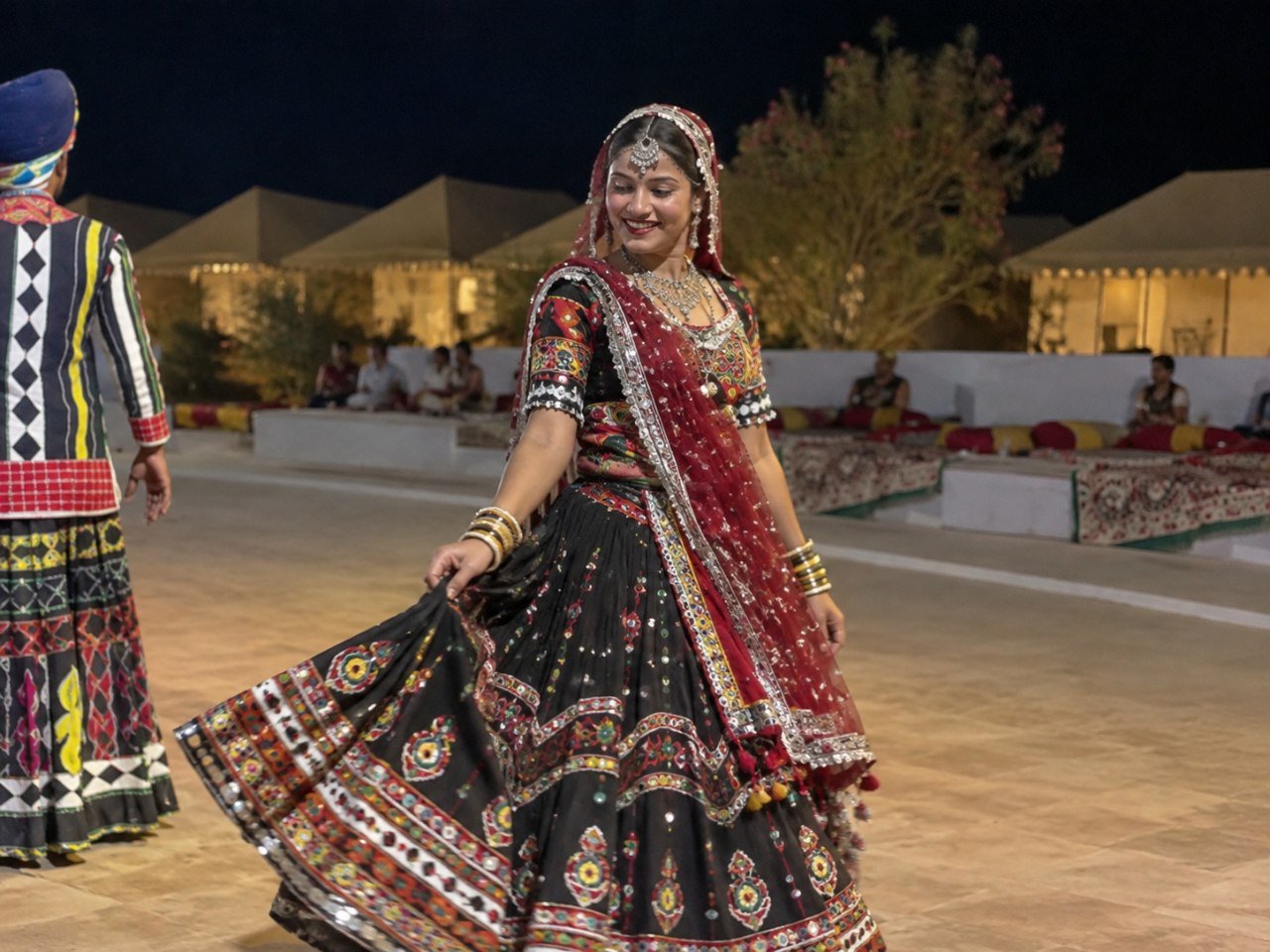
Jaisalmer is home to many communities with their own customs, languages and beliefs. Not everyone lives or dresses the same way. Therefore, treat cultural performances as a window into specific traditions rather than a picture of everyday life for all.
Famous Shopping Items and Handicrafts in Jaisalmer
Shops selling Jaisalmer handicrafts and souvenirs line the lanes below and inside the fort. Common finds include:
- Embroidered textiles — mirror-work bags, cushion covers, wall hangings and bedspreads.
- Traditional fabrics — tie-dye, block prints and bright cotton scarves and stoles.
- Leather goods — bags, slippers and accessories, where available.
- Stone and wood items — small carved pieces, boxes and decorative objects, including items in the local yellow sandstone.
- Jewellery and accessories — silver and costume jewellery in regional styles.
- Souvenirs — puppets, miniature camels, paintings and other items inspired by Rajasthani culture.
However, not everything on sale in Jaisalmer comes from local artisans. To shop well:
- Compare a few shops before buying.
- Ask about the material, and who made the item, where and how.
- Bargain politely in markets; however, fixed-price shops may not negotiate.
- Prefer reputable sellers and get a receipt for larger purchases.
- If buying leather, also ask what kind of leather it is.
Famous Experiences You Should Not Miss in Jaisalmer
The best things to do in Jaisalmer combine heritage, landscape and culture:
- Walk the lanes of Jaisalmer Fort early in the morning.
- Spend time with the carved facades of the havelis.
- Then watch a sunset over the dunes at Sam.
- Choose a camel safari, jeep ride or simply a walk on the sand, whatever suits you.
- Stay a night in a desert camp, if it fits your budget and plans.
- Eat a Rajasthani thali and try ker sangri.
- Browse the old-city markets for textiles and crafts.
- Visit one or two heritage sites beyond the city, such as Bada Bagh or Kuldhara.
You do not need to do everything on this list to enjoy Jaisalmer. Instead, pick what suits your interests and pace.
Best Time to Experience What Jaisalmer Is Famous For
October to March is the most comfortable time for both sightseeing and desert activities. During these months, days feel pleasant and nights turn cool to cold. In contrast, April to June is very hot, so plan outdoor visits for early mornings and evenings. Meanwhile, July to September brings monsoon conditions that vary from year to year. Expect heat and humidity alongside occasional rain. For a month-by-month guide, see our article on the best time to visit Jaisalmer.
How Many Days Do You Need to Experience Jaisalmer?
These are flexible examples. Your hotel location, travel schedule and interests will shape the right length.
- One day: the fort, two or three havelis and Gadisar Lake, with a sunset at a viewpoint in or near the city.
- Two days: the city on day one, and a desert afternoon and evening at Sam on day two, with an optional overnight camp.
- Three days: a relaxed pace, time for markets and food, and an extra excursion such as Kuldhara, Khaba Fort or Bada Bagh.
To plan your spending, see our Jaisalmer trip cost guide. Otherwise, compare our Jaisalmer tour packages if you prefer an organised trip.
Frequently Asked Questions
Landmarks and Sights
What is Jaisalmer most famous for?
Its golden sandstone architecture, the living Jaisalmer Fort and carved havelis. In addition, the Sam Sand Dunes, desert safaris, folk music and Rajasthani desert food add to its fame.
Why do people call Jaisalmer the Golden City?
Because builders used yellow sandstone for most of its fort, havelis and old-city buildings. As a result, the city glows gold in the sun.
What is the most famous place in Jaisalmer?
Jaisalmer Fort, a 12th-century hill fort that people still live in. It also belongs to the UNESCO-listed Hill Forts of Rajasthan.
What is special about Jaisalmer Fort?
It is one of the few forts in the world where people still live. Inside its walls, you will find homes, shops, a palace museum and carved Jain temples.
Is Sam Sand Dunes worth visiting?
Yes, for most travellers. Sunset on the dunes and a camel or jeep ride stand out. In addition, a desert camp evening often becomes a trip highlight.
Food, Culture and Trip Planning
What food is Jaisalmer famous for?
Rajasthani desert dishes such as dal baati churma, gatte ki sabzi, ker sangri and the Rajasthani thali. Above all, ker sangri links most closely to the Thar region.
What should I buy in Jaisalmer?
Embroidered and mirror-work textiles, tie-dye fabrics, small stone carvings, silver jewellery and Rajasthani souvenirs. However, compare shops and ask about materials before you buy.
What cultural experiences can I enjoy in Jaisalmer?
Folk music by Manganiyar and Langa musicians, as well as Kalbeliya dance performances. You can also enjoy festivals such as the Desert Festival, local markets and traditional food.
How many days are enough to explore Jaisalmer?
Two days covers the city and a desert evening. However, three days gives a relaxed pace and time for an extra excursion.
What is the best time to experience Jaisalmer’s desert attractions?
October to March, when days feel pleasant and desert evenings turn cool. In summer, however, keep desert activities to early mornings and around sunset.