
Desert National Park Jaisalmer Rajasthan: Complete Travel Guide
Desert National Park in Jaisalmer ranks among India’s largest protected areas. It also shelters one of the last strongholds of the critically endangered Great Indian Bustard.
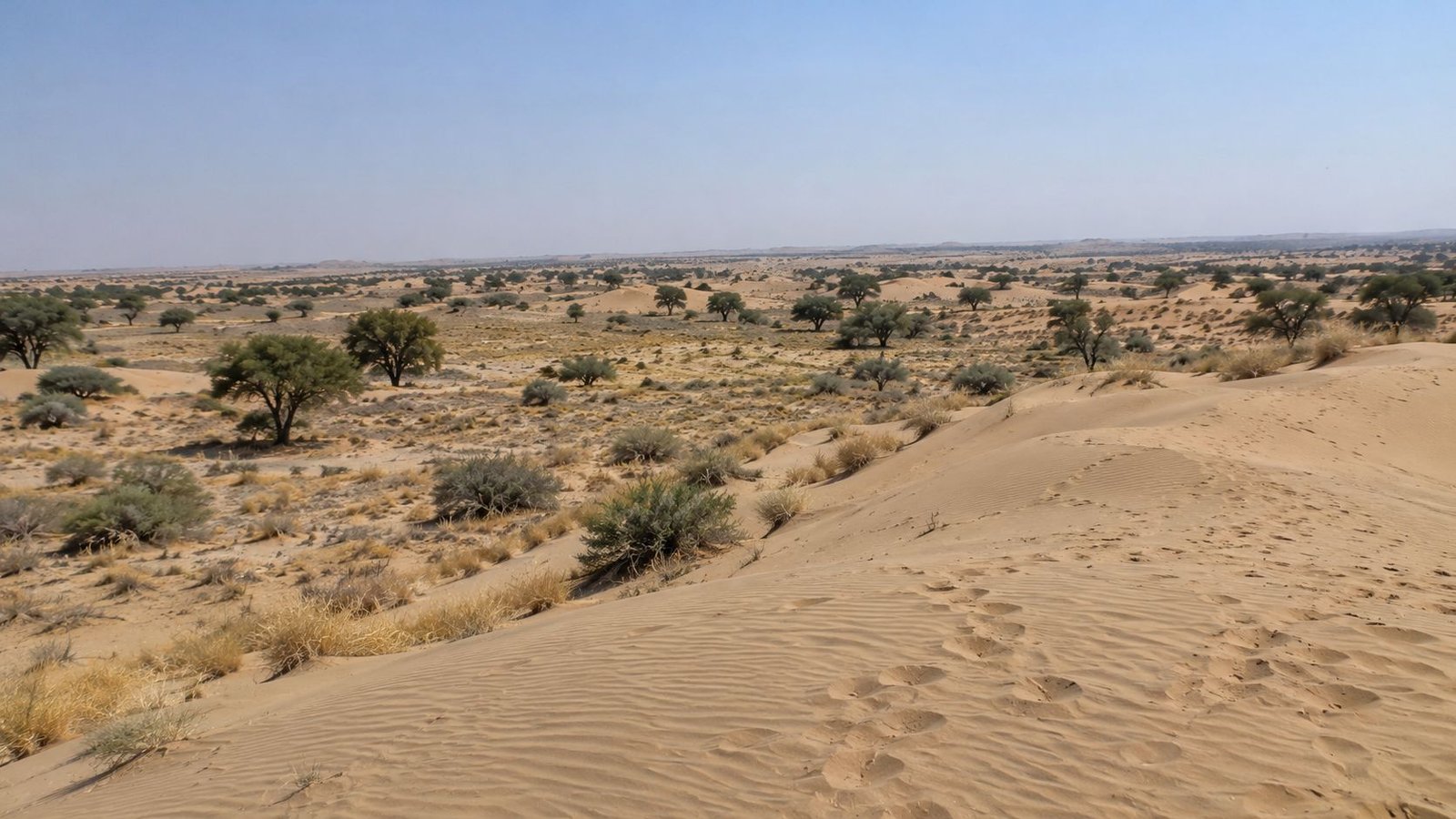
Desert National Park offers a rare chance to see the Thar Desert close to its natural state. It spreads across Jaisalmer and Barmer districts. Within its borders lie sand dunes, rocky plains, seasonal salt lakes and fossil deposits. In addition, it shelters wildlife that has adapted to one of India’s harshest climates. This includes the critically endangered Great Indian Bustard.
Perhaps you have already seen Jaisalmer’s forts and havelis. If so, the park offers something quite different. Here, you see the desert as a living ecosystem rather than a backdrop. Moreover, it offers real wildlife-watching, unlike the busy dune activities near the city.
About Desert National Park
Locals sometimes call it Jaisalmer Desert National Park. The park covers roughly 3,162 square kilometres. Around 1,900 square kilometres lie in Jaisalmer district. The remaining 1,262 square kilometres fall in neighbouring Barmer district. As a result, it ranks among the largest national parks in India by area. It also protects one of the country’s largest representative samples of the Thar Desert ecosystem.
Unlike a typical forest reserve, the park has shifting sand dunes and craggy rock formations. It also includes compact salt lake beds and mixed grasslands. In addition, fossil sites here record the region’s geological past. This variety within one area makes the park important for both research and wildlife tourism.
Location in Western Rajasthan
The park lies southwest of Jaisalmer city in western Rajasthan. It stretches across parts of Jaisalmer district and into Barmer district. Several villages and access points sit around and within its boundaries. However, most visitors start from Jaisalmer city, the main gateway to the park.
Why Is the Park Famous?
Above all, the park shelters one of the last strongholds of the Great Indian Bustard. This critically endangered bird is also Rajasthan’s state bird. Locally, people call it Godawan. Over recent decades, habitat loss and other pressures have cut its numbers sharply. Today, the park’s grasslands and open scrub form one of its few remaining natural homes. Therefore, conservation here carries great ecological importance.
Beyond the bustard, the park stands out for its varied desert habitats within one area. It also preserves a representative section of the Thar Desert ecosystem. Moreover, it supports both resident and migratory birdlife.

History and Establishment
On 4 August 1980, the Government of Rajasthan notified the area as a wildlife sanctuary. It acted under the Wildlife (Protection) Act, 1972. The aim was to protect the Thar Desert’s fragile ecosystem and its wildlife. Specifically, officials wanted to protect the declining Great Indian Bustard. Later, in 1981, the area became a national park with stricter legal protection.
Before this, the rulers of Jaisalmer had long used much of this land as hunting grounds. Since gaining protection, the park has become a focus of desert conservation in Rajasthan. For example, the Rajasthan Forest Department runs dedicated bustard conservation programmes here.
Wildlife and Biodiversity
The park supports many species that suit arid desert conditions. Commonly cited mammals include chinkara (Indian gazelle), blackbuck, desert fox and desert cat. In addition, reptiles such as monitor lizards and the spiny-tailed lizard live here.
The birdlife deserves special mention, with over 200 species on record. Many migratory species also pass through during the cooler months. Besides the Great Indian Bustard, you may spot eagles, falcons and vultures. You may also see sandgrouse and other desert birds near seasonal water sources. However, nobody can guarantee a bustard sighting on any given visit. The species has become very rare and elusive. So treat a sighting as a bonus rather than an expectation.

Desert National Park Safari
Most visitors explore the park by jeep safari. This is because the area is huge, and walking covers little ground. Safaris usually focus on zones with higher wildlife activity. For example, they often visit grassland areas linked to the Great Indian Bustard.
The forest department manages safari availability, routes, group sizes and bookings. Since these details can change, this guide does not list fixed prices or timings. Therefore, confirm current arrangements with the Rajasthan forest department or an authorised local operator. Do this before you plan a desert national park safari in Jaisalmer.
Desert National Park Jaisalmer Timings and Entry Fee
Confirm details before you go, because the forest department sets both timings and fees.
This guide cannot reliably confirm current visiting hours for the park. Authorities may adjust timings by season or for conservation reasons. This happens especially around the Great Indian Bustard’s breeding periods. Similarly, this guide cannot confirm current entry fees or ticket prices. Authorities revise these from time to time. In addition, fees may differ for safaris or guided visits. So verify both with the forest department or a recognised local operator.
Jaisalmer to Desert National Park Distance
The park lies southwest of Jaisalmer city. Its boundaries cover a huge area. However, the main access points sit within a fairly short drive of the city centre. The exact distance depends on your entry point or safari zone. For this reason, this guide does not give one fixed distance figure. Instead, confirm the route and distance with a local operator or the forest department.
How to Reach from Jaisalmer
Most visitors travel by road from Jaisalmer city, the main base for any visit. Jaisalmer has good rail and road links to major cities in Rajasthan and beyond. It also has its own airport, although flights there can be seasonal. From the city, most people hire a taxi or book a safari vehicle to the entry points. This is because public transport does not usually serve the park’s interior.
Best Time to Visit
Roughly September to March works best for a visit. During these months, daytime temperatures stay far more manageable. In contrast, peak summer brings extreme heat to this part of the Thar Desert. Winter also brings migratory birds to the region. As a result, birdwatching becomes more varied. Moreover, early morning safaris usually give better wildlife sightings. That’s because desert animals and birds stay more active in the cooler hours.
What to See and Do
- Join a jeep safari through the park’s grasslands, dunes and rocky terrain.
- Watch for the Great Indian Bustard, especially in known grassland habitats.
- Look out for desert mammals such as chinkara, blackbuck and desert fox.
- Explore varied terrain, including sand dunes, salt lake beds and rocky outcrops.
- Visit in the cooler months to see migratory birds as well as resident wildlife.
Tips for Your Visit
- Confirm entry fees, timings and safari arrangements before you travel.
- Go early in the morning for better sightings and cooler temperatures.
- Carry enough water and sun protection, because the park offers little shade and few facilities.
- Wear neutral, comfortable clothing that suits a safari.
- Keep a respectful distance from wildlife, especially near bustard habitats.
- Follow your guide’s instructions at all times.
- Expect basic infrastructure, since this is a working conservation area rather than a tourist attraction.
Map and Access Points
The park sits southwest of Jaisalmer city and stretches into Barmer district. Rather than one compact site, it covers a broad swathe of desert. Therefore, most visits focus on specific entry points or safari zones. For a current map of access points and safari zones, ask the forest department or a local operator. You can also check Rajasthan Tourism for general travel information.
Places to Visit Near Desert National Park
Many travellers combine the park with other sights in the wider Jaisalmer region. This works well because the park lies fairly close to the city. For example, Sam Sand Dunes sits within the same broader desert landscape. In addition, you can pair your visit with Jaisalmer Fort and the city’s major havelis. Together, these stops make a well-rounded Jaisalmer sightseeing plan.
Desert National Park FAQs
It is one of the last major habitats of the critically endangered Great Indian Bustard. It also protects one of India’s largest and most varied samples of Thar Desert terrain.
The park lies southwest of Jaisalmer city, a fairly short drive away. However, the exact distance depends on your entry point, so confirm it with a local operator.
This guide cannot confirm current visiting hours, because authorities may adjust them by season. Therefore, check with the Rajasthan forest department before you plan your visit.
Authorities revise entry fees from time to time, so this guide does not list them. Confirm current prices before your trip.
Yes, jeep safaris are the usual way to explore the park. However, confirm bookings and prices with the forest department or an authorised local operator.
Rajasthan first notified it as a wildlife sanctuary in August 1980. Later, in 1981, it became a national park.
You may see chinkara, blackbuck, desert fox and various reptiles. In addition, the park has over 200 recorded bird species, including the Great Indian Bustard.
Roughly September to March works best. During these months, temperatures feel more comfortable and migratory birds join the resident wildlife.