
Nathmal Ki Haveli, Jaisalmer: History, Architecture, Timings & Visitor Guide
A 19th-century mansion built by two brothers who never shared a blueprint — Nathmal Ki Haveli still reveals their different styles in Jaisalmer’s old town.
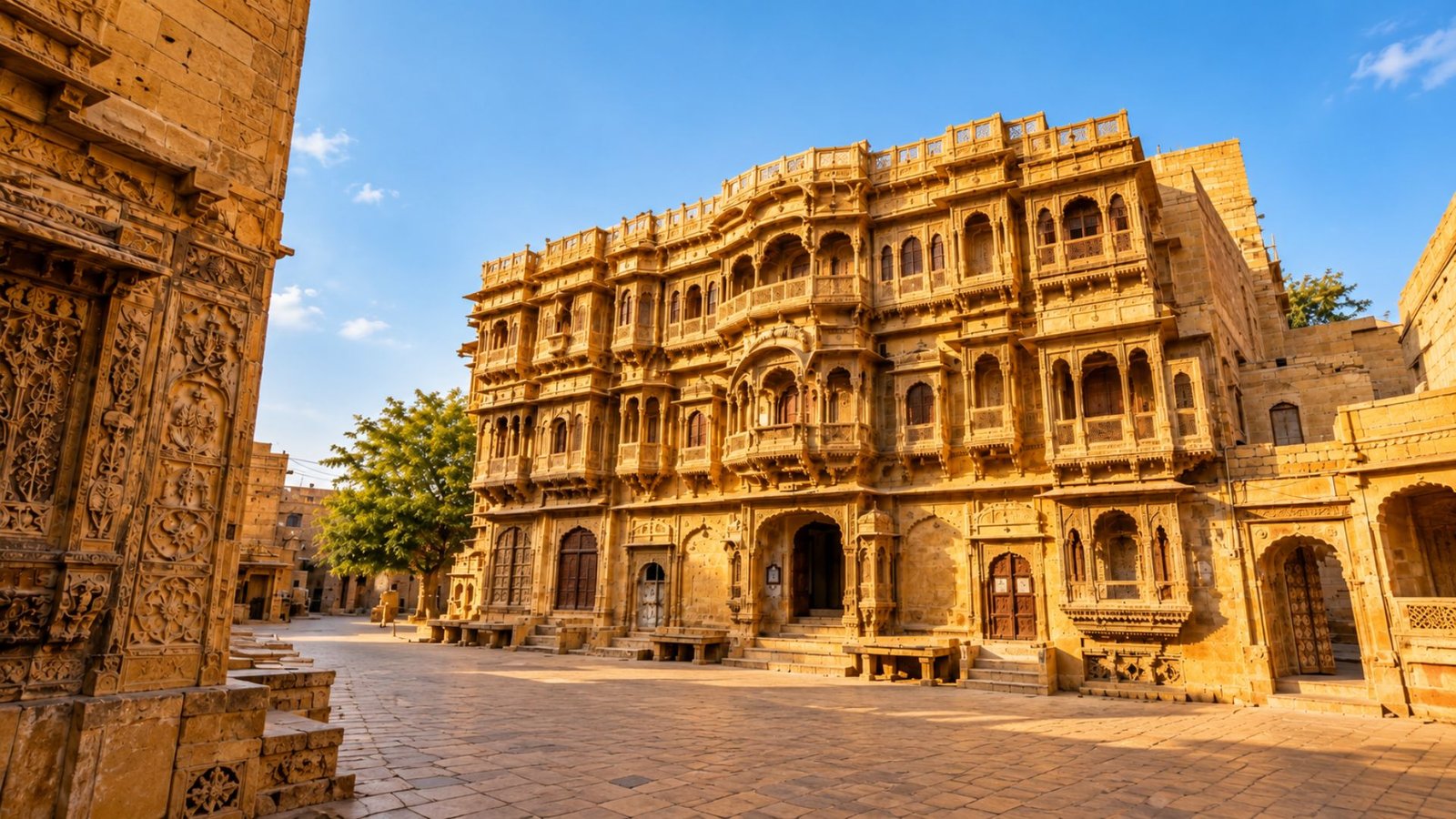
Nathmal Ki Haveli is one of the most famous historic havelis in Jaisalmer. Located in the old city, it is known for its detailed yellow sandstone carvings, traditional architecture, and the story of the two brothers linked to its construction.
The building dates to the late 19th century and served as the residence of Diwan Mohata Nathmal, a senior official of the Jaisalmer Kingdom. Today, visitors come to see its detailed stonework and distinctive design.
This guide covers the history, architecture, location, entry details, photography tips, and other useful information for planning a visit.
History of Nathmal Ki Haveli
Maharawal Beri Sal commissioned the haveli as the residence of his Diwan, Mohata Nathmal. Builders completed the building in 1885. This places it in the late 19th century, when wealthy merchants and senior officials built elaborate homes across Jaisalmer.
The building also has a well-known construction story. Local tradition connects its two main sections with two brothers, Hathi and Lulu. Each brother is said to have worked on a separate side.
Their work helps explain the small differences between the two sections. Visitors can compare the carvings, windows, and decorative details on both sides.
The Story of Hathi and Lulu
Local tradition credits two brothers, Hathi and Lulu, with building the two main sections of the haveli. Each brother reportedly worked on a separate side instead of following one shared plan.
Look closely at the facade and you can notice small differences. The carvings, windows, and decorative features do not appear exactly the same on both sides.
This story remains popular with visitors. However, it comes from local tradition rather than a fully documented construction record. The differences in the stonework can still be seen on the facade today.
Architecture and Design
The haveli combines Rajput and Islamic design influences. Local yellow sandstone forms the main building material. The stone takes on a warm golden tone under the desert sun.
Entrance and Jharokhas
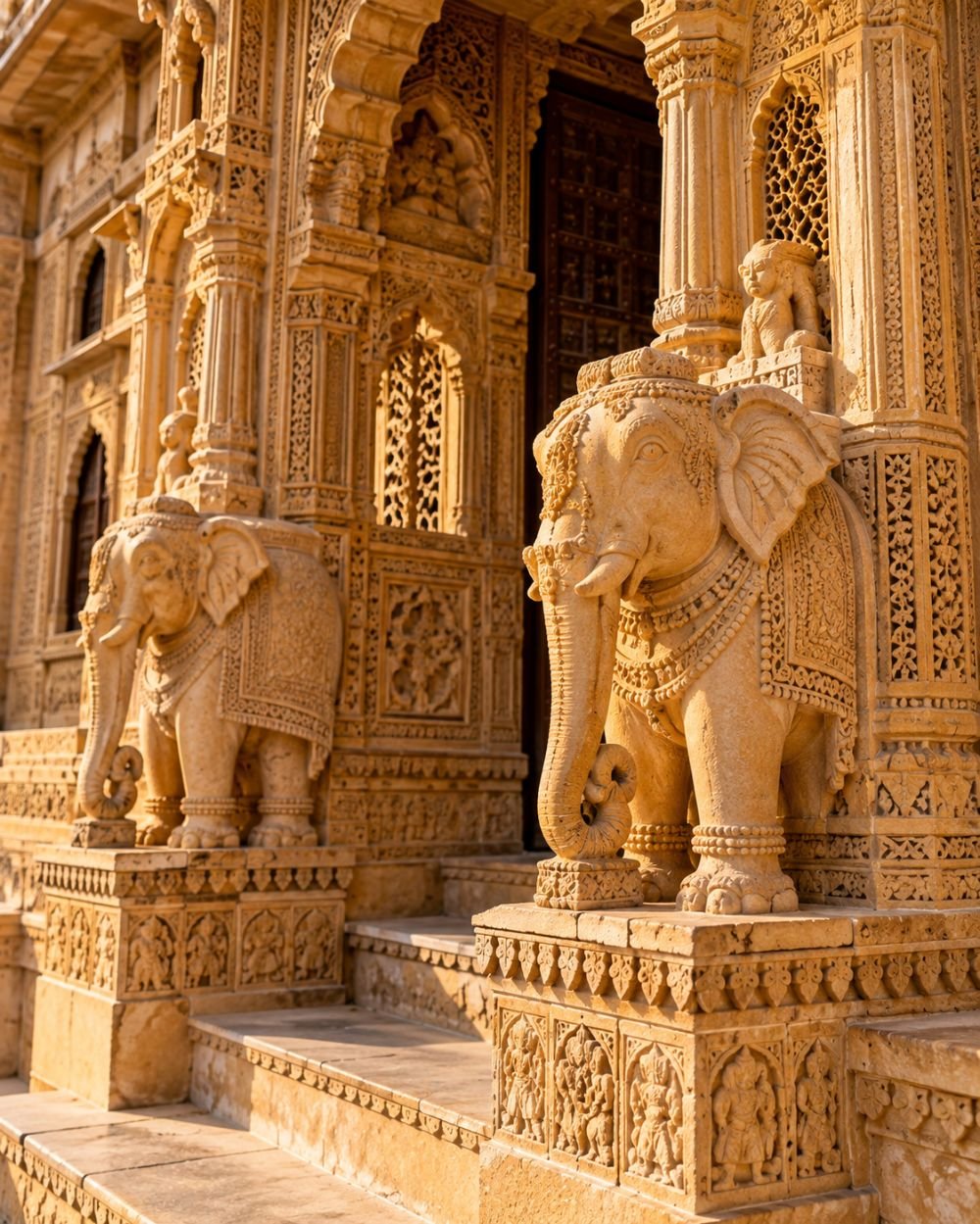
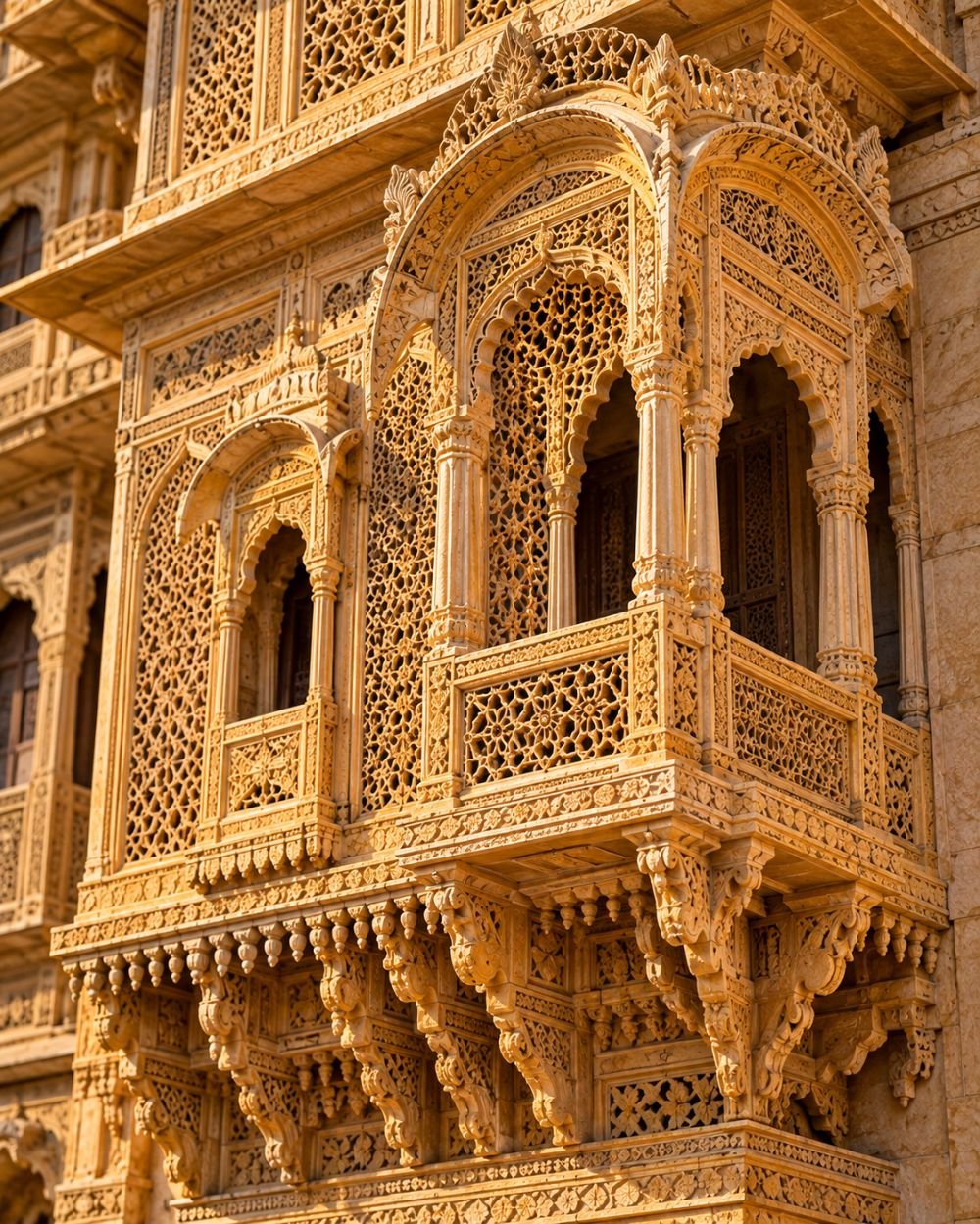
The entrance is one of the most photographed parts of the building. Two carved stone elephants stand beside the doorway. Above the entrance, you can see carved balconies, pillars, and jharokhas. These projecting windows are common in traditional Rajasthani architecture. They also help with shade and airflow.
Jali Work
Stone jali, or latticework, appears across the facade and interior openings. The small openings filter sunlight while allowing air to move through the building.
Courtyards
Courtyards form another important part of the design. These shaded spaces could support family life and daily activities. Open courtyards also helped improve airflow inside the building.
What to See Inside Nathmal Ki Haveli
Carved and Painted Details
The interior continues the detailed work seen outside. Walls, pillars, and ceilings feature carvings and painted designs. Animals, birds, flowers, and traditional patterns appear throughout the space.
Unique Stone Carvings of Nathmal Ki Haveli
Some carvings show objects linked to the modern world of the 19th century. Local stories mention designs of bicycles and fans. These details give the interiors an unusual character. Such explanations come from local accounts and oral traditions. They are best treated as stories connected with the building rather than fully verified historical records.
Photography Inside Nathmal Ki Haveli
Photography may be restricted in certain areas. Check signs or ask staff before taking pictures inside.
Nathmal Ki Haveli Location in Jaisalmer
The haveli sits in the old city of Jaisalmer, near the narrow lanes around Sadar Bazar. Its central location makes it easy to include in a wider heritage walk.
You can also combine the visit with Jaisalmer Fort and other attractions in the old city.
Walking routes can vary because of the narrow lanes. Check a map or ask locally for the most convenient route.
Timings, Ticket Price and Entry Fee
The site is often reported as free to enter. Visiting hours generally fall during the daytime.
Opening hours, entry rules, and photography policies can change. Local management may also change details by season.
Check the latest information before your visit through official Rajasthan tourism resources or a reliable local source.
Photos and Best Things to Photograph
The sandstone facade offers many strong photo opportunities. Focus on the carved elephants, jharokhas, balconies, and fine stone details.
Early morning and late afternoon can provide softer light. This light can bring out the warm golden tone of the sandstone.
Look at both sides of the facade as well. Small differences in the carvings make them interesting to compare.
Photography inside may have restrictions. Check the rules before taking interior photos.
Its Place in Jaisalmer Sightseeing
Nathmal Ki Haveli is often included with Patwon Ki Haveli and Salim Singh Ki Haveli when visitors explore the old city.
Its central location also makes it easy to combine with Jaisalmer Fort and nearby bazaars. Several heritage attractions can fit into one walking trip.
For travellers interested in architecture, the building offers another view of Jaisalmer’s heritage. The fort shows military and royal architecture, while this site represents traditional residential design.
Patwon Ki Haveli vs Nathmal Ki Haveli
Patwon Ki Haveli and Nathmal Ki Haveli are both popular heritage attractions in Jaisalmer. Both sites show the skill of local stone craftsmen.
Patwon Ki Haveli contains a group of havelis built by a wealthy merchant family. Its larger scale can make a strong first impression.
Nathmal Ki Haveli is a single residence. Its appeal comes from detailed carvings and the story linked to Hathi and Lulu.
Visitors interested in Jaisalmer’s heritage can include both sites in the same sightseeing plan.
Who Should Visit?
History lovers can explore the building’s connection with Jaisalmer’s royal administration and learn about the Hathi and Lulu story. Architecture lovers can study the jharokhas, jali work, carved sandstone, balconies, and courtyard design.
Photographers can focus on the carved elephants, facade, balconies, and detailed stonework. Travellers interested in local culture can also use the visit to understand the role of traditional stone-carving in Jaisalmer’s historic buildings.
Tips for Visiting
- Visit early in the morning or late in the afternoon for softer light and a more comfortable experience.
- Combine your visit with Jaisalmer sightseeing and other old-city attractions.
- Check current entry fees, opening hours, and photography rules before visiting.
- Compare both sides of the facade and look for differences in the carvings.
- Wear comfortable shoes because the old city has narrow and uneven lanes.
Official Jaisalmer Tourism Information
For broader information about Jaisalmer’s heritage attractions, visit the official Rajasthan Tourism Jaisalmer guide .
Frequently Asked Questions
It is famous for its detailed yellow sandstone carvings, traditional architecture, and the Hathi and Lulu construction story.
Maharawal Beri Sal commissioned the building as the residence of Diwan Mohata Nathmal. Construction was completed in 1885.
Local tradition credits two brothers, Hathi and Lulu, with building the two main sections of the haveli.
They were two brothers linked by local tradition with the separate construction of the two main sections.
The design combines Rajput and Islamic influences with carved sandstone, jharokhas, jali work, courtyards, and carved elephants at the entrance.
It is located in the old city of Jaisalmer, near Sadar Bazar and Jaisalmer Fort.
Visiting hours generally fall during the daytime, but schedules can change. Check current information before visiting.
The site is often reported as free to enter. Confirm the current entry policy before your visit.
Opening status can change, so check the latest local or official information on the day of your visit.