
Patwon Ki Haveli, Jaisalmer: History, Architecture & Visitor Guide
Patwon Ki Haveli tells the story of five mansions, one merchant family, and the largest haveli complex in Jaisalmer, built haveli by haveli across five decades.
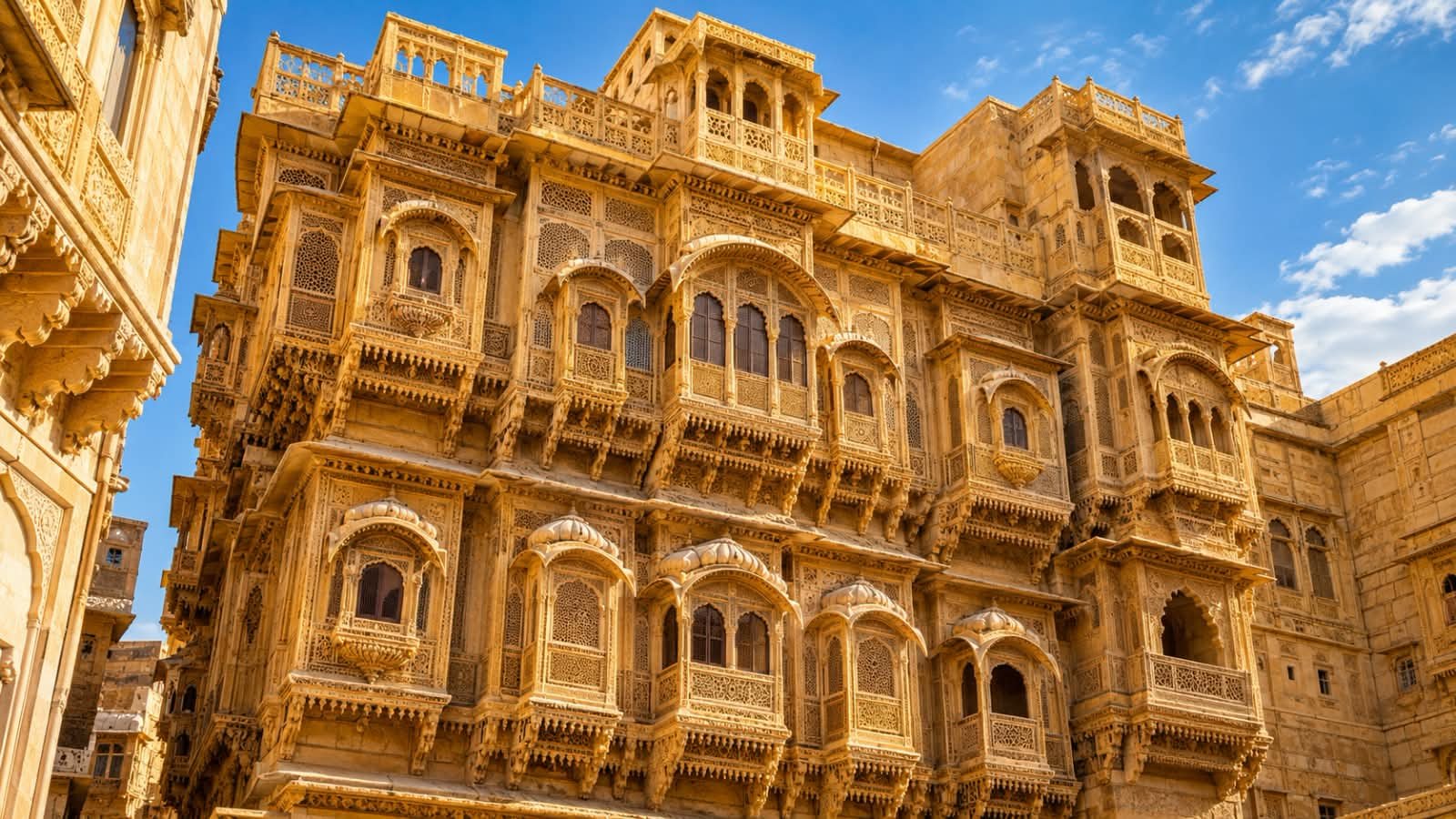
Patwon Ki Haveli is a group of five connected mansions located in the heart of Jaisalmer. A wealthy merchant family built this haveli complex, and people consider it one of the largest heritage buildings in the city. Each mansion was created for one of the merchant’s sons, which makes the complex different from a single residence.
The haveli is also known as Kothari’s Patwa Haveli. People often call it the Mansion of Brocade Merchants because of the family’s traditional trading background. Travellers exploring Jaisalmer sightseeing usually include this heritage attraction with Jaisalmer Fort and other famous locations.
Patwon Ki Haveli History
The history of this heritage mansion begins with Guman Chand Patwa, a wealthy merchant from 19th-century Jaisalmer. His family traded in gold and silver embroidery thread used for traditional Rajasthani clothing. This business made the family famous as brocade merchants, which gave the haveli its alternate name.
Guman Chand Patwa started building the first haveli around 1805. As his family’s wealth increased, he constructed four more havelis for his sons. The complete complex developed over several decades during the 19th century.
Later, the family’s financial condition declined and some parts of the havelis suffered damage. Authorities restored some sections, and today the Archaeological Survey of India manages certain areas. Other sections remain privately owned and include craft shops and residences.
Why Was Patwon Ki Haveli Built?
This historic haveli was built as a family residence for Guman Chand Patwa and his five sons. Instead of creating one large mansion, the family built five separate but connected havelis.
This design gave each son an independent home while keeping the entire family within the same complex. This unique arrangement makes the heritage mansion different from many other buildings in Jaisalmer.
Patwon Ki Haveli Architecture and Design Features
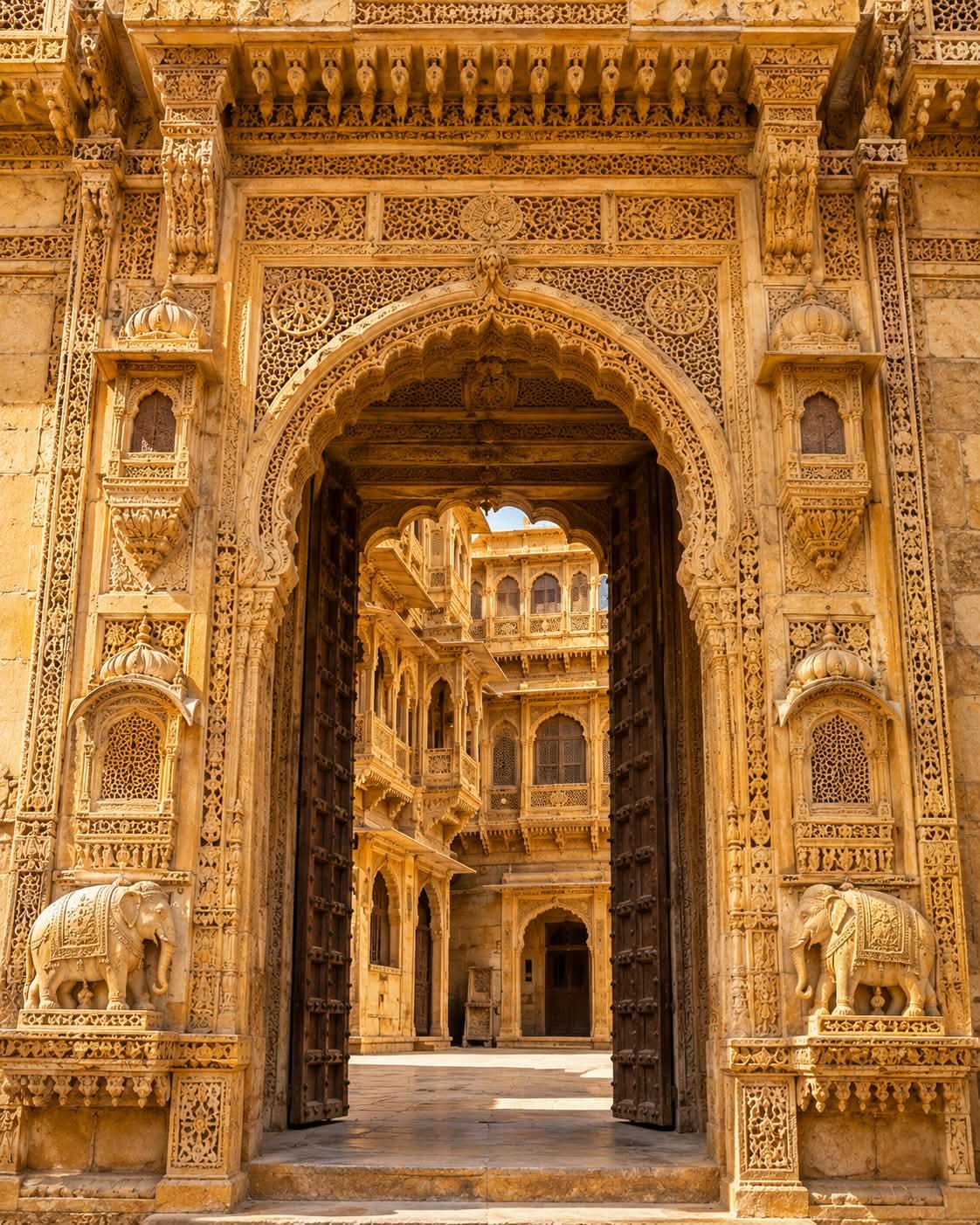
This historic mansion represents the traditional Rajputana architecture found across Jaisalmer. The complex uses local yellow sandstone and rises several floors above the narrow streets of the old city.
Each haveli has its own carved facade, but together they create a unified appearance. The detailed stonework shows the skills of traditional craftsmen who worked on this grand merchant residence.
The exterior features beautiful jharokhas, which are carved balcony windows found on the upper floors. These balconies were not only decorative but also helped improve air circulation inside the building.
The hot and dry climate of Jaisalmer made ventilation important. The placement of balconies and windows helped maintain a comfortable indoor environment without modern cooling systems.
Visitors can see carved arches, gateways, floral designs, geometric patterns, and stone artwork throughout the complex. Craftsmen created these details directly on the sandstone surface.
Each of the five havelis has its own style and character. However, all sections combine to create one impressive heritage complex. This evolving design makes this mansion different from single-owner buildings like Nathmal Ki Haveli.

Inside Patwon Ki Haveli: What to See
Only some parts of this heritage mansion are open for visitors because other sections are still used as homes or craft shops. The accessible areas work mainly as a museum and show how the Patwa family lived.
Inside the haveli, visitors can see carved pillars, high ceilings, mirror work, and painted murals. The museum displays rooms that represent daily life, including dining areas, dressing spaces, and sitting rooms.
The interiors also include traditional instruments, board games, and large storage vessels once used in household kitchens. These items help visitors understand the lifestyle of Jaisalmer’s merchant families during the 19th century.
Some traditional accounts mention hidden wall spaces behind paintings and murals. These spaces were believed to store valuable items and show how havelis served both as homes and secure properties.
Where Is This Heritage Mansion Located?
This heritage mansion is located in the old city area of Jaisalmer. It stands in a narrow lane near Choora Paada and remains close to other major heritage attractions. Visitors can also check official tourism information through the Rajasthan Tourism website before planning their visit.
The building is part of Jaisalmer’s historic core and sits near Jaisalmer Fort. Visitors can easily include it in a walking tour of the old city.
Timings and Entry Fee
This historic mansion usually welcomes visitors from morning until early evening. Indian and foreign visitors often pay different entry fees, and camera charges may apply.
Timings, entry fees, and camera charges can change over time. Visitors should confirm the latest details locally or through official Rajasthan tourism sources before planning their visit.
Museum Experience and Cultural Importance
The museum inside this heritage mansion helps visitors understand the lifestyle of a wealthy merchant family in Jaisalmer. Unlike royal spaces at Jaisalmer Fort, the museum focuses on everyday domestic life.
The displayed rooms, furniture, and traditional items show the family’s routines, craftsmanship, and lifestyle during the 19th century. The museum adds valuable context to a Jaisalmer heritage tour.
This heritage attraction also shows how skilled artisans used sandstone carving techniques in private homes. These details reflect the same craftsmanship seen in many royal buildings of Rajasthan.
Jaisalmer Sightseeing with Heritage Attractions
This heritage mansion is one of the largest and most detailed havelis in Jaisalmer. Its size, sandstone carvings, and museum make it an important attraction in the city.
Visitors often explore this historic site along with Nathmal Ki Haveli and Salim Singh Ki Haveli. Each haveli has a different style, history, and architectural identity.
Because of its central location, this heritage attraction fits easily into a walking tour of Jaisalmer’s old city. Visitors can combine it with Jaisalmer Fort, local markets, and nearby heritage attractions.
Distance from Jaisalmer Fort
This heritage mansion and Jaisalmer Fort are located within the old city’s heritage area. Many visitors explore both places during the same walking tour.
The exact distance can vary depending on the route through the narrow streets of the old city. However, both attractions are close enough for most travellers to reach on foot.
Best Time to Visit Patwon Ki Haveli
Jaisalmer has a hot and dry climate during most of the year. October to March usually brings comfortable weather for exploring the old city.
Morning visits provide softer light for viewing the sandstone carvings and often bring fewer crowds. The best time mainly depends on choosing a period when daytime temperatures are easier to manage.
Tips for Visiting the Haveli
- Wear comfortable shoes because the surrounding old city lanes can be narrow and uneven.
- Visit during morning or late afternoon for better light and a more comfortable walking experience.
- Confirm current entry fees and timings before visiting because these details can change.
- Spend enough time exploring both the exterior carvings and museum interiors.
- Combine your visit with Jaisalmer Fort and other nearby heritage attractions.
Frequently Asked Questions
Patwon Ki Haveli is famous for its five connected mansions, detailed sandstone carvings, and importance as a major heritage attraction in Jaisalmer.
Patwon Ki Haveli is located in the old city of Jaisalmer, near Choora Paada, close to Jaisalmer Fort and other heritage sites.
Guman Chand Patwa started building Patwon Ki Haveli around 1805. His family later expanded the complex into five connected havelis for his sons.
The five havelis were built for Guman Chand Patwa’s sons. This allowed each family member to have a separate residence within the same complex.
Visitors can see carved pillars, mirror work, murals, traditional furniture, and artefacts that show the Patwa family’s lifestyle.
This heritage mansion usually welcomes visitors during daytime hours. Visitors should confirm the current schedule before planning their trip.
Entry fees can differ for Indian and foreign visitors. Camera charges may also apply, so visitors should confirm current pricing before visiting.
Both locations are inside Jaisalmer’s old city area. Most visitors can explore them on foot during the same heritage walk.
This heritage mansion offers detailed sandstone architecture, merchant history, and museum displays. It is an important stop for travellers interested in Jaisalmer’s heritage.