
Bada Bagh Jaisalmer: History, Timings, Entry Fee & Complete Travel Guide
Bada Bagh, Jaisalmer is a hillside cluster of royal cenotaphs, six kilometres north of the city. It also ranks among Jaisalmer’s best sunset spots.
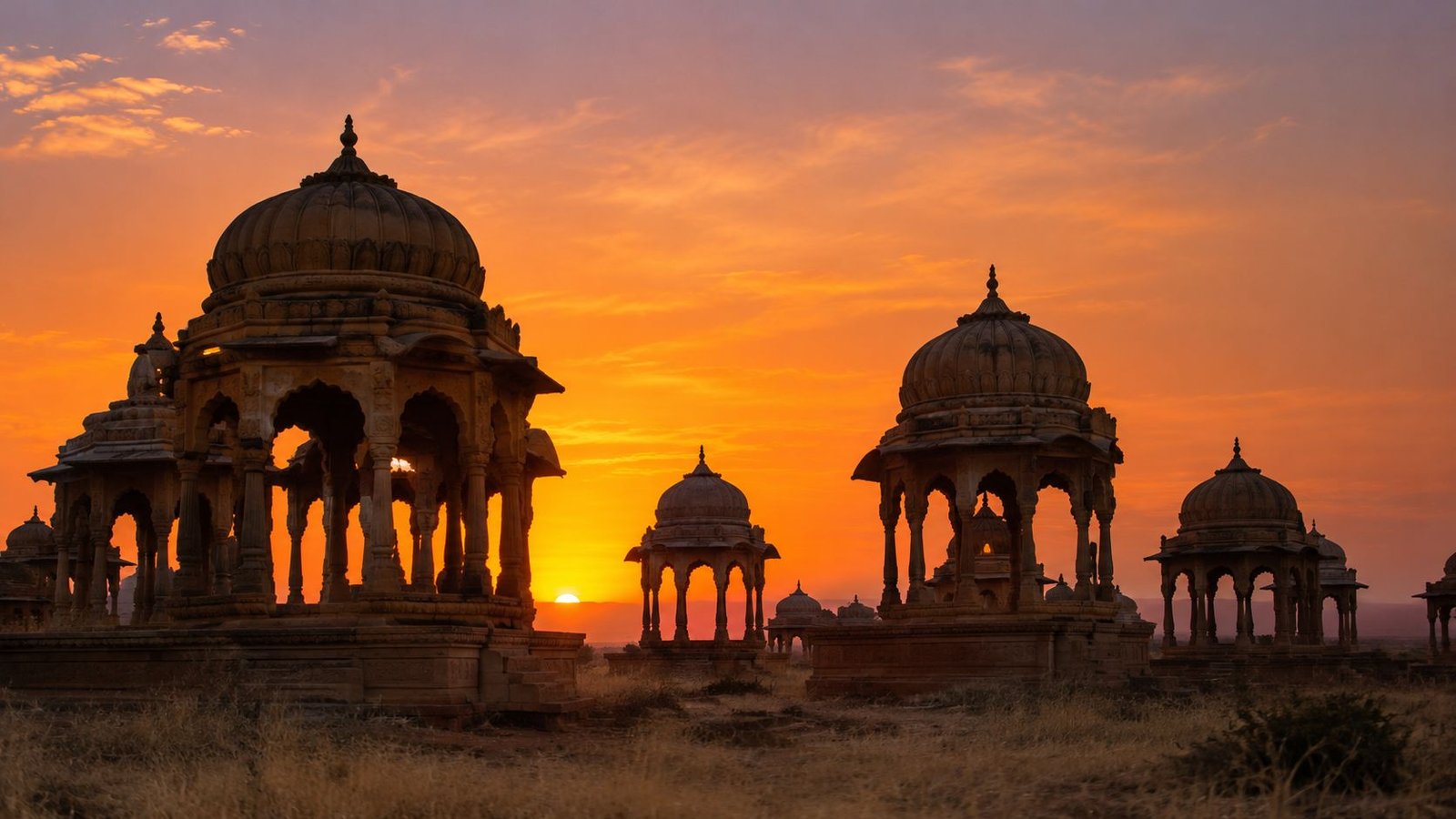
Bada Bagh means “Big Garden” in Hindi. This complex of royal cenotaphs sits on a small hill about six kilometres north of Jaisalmer. Below it lies an old mango grove, once fed by a nearby dam. Today, Bada Bagh is one of the city’s best-known heritage sites. Its finely carved sandstone chhatris honour generations of the ruling family.
Most Jaisalmer sightseeing tours include Bada Bagh. Travellers come for its royal history and also for its famous desert sunsets.
Where Is Bada Bagh in Jaisalmer?
Bada Bagh lies about six kilometres north of Jaisalmer city, on the road towards Ramgarh. It stands on raised ground above the old garden and open desert. Because of this height, it makes a great sunset viewpoint. In addition, a modern wind farm nearby adds a striking contrast to the old cenotaphs.
History of Bada Bagh, Jaisalmer
Quick note: many websites confuse two rulers with similar names. Here is the correct story.
The story of Bada Bagh begins in the 16th century. Jait Singh II ruled Jaisalmer from 1497 to 1530. During his reign, he built a dam called Jait Bandh to create a water reservoir. As a result, this dry patch of desert turned green.
After his death, his son Lunkaran laid out a garden beside the lake. He also built a memorial chhatri on the hill above it. This act marked the start of the Bada Bagh complex.
Over the next centuries, later rulers added their own cenotaphs here. Queens, princes and other royals also received memorials at the site. Most of the chhatris you see today date from the 18th, 19th and early 20th centuries. Together, they form a stone record of Jaisalmer’s Bhati dynasty. The last chhatri, meant for Maharawal Jawahir Singh, still stands unfinished after Indian independence.
Some websites credit the site to Jai Singh II instead. However, that name belongs to Jai Singh II of Amber, a different ruler from the 18th century. The records clearly point to Jait Singh II of Jaisalmer. You can read more on the Bada Bagh Wikipedia page.
Bada Bagh Cenotaphs: The Royal Chhatris of Jaisalmer
Across Rajasthan, people use the word chhatri for a domed memorial pavilion. These pavilions honour rulers and nobles after their death. At Bada Bagh, each chhatri belongs to a specific member of the royal family. As a result, the complex works like a family tree carved in stone.
Look inside the chhatris for marble slabs with inscriptions about each royal. Many slabs also show a symbolic image of a man on horseback. A local guide can help you understand the stories behind them.

Architecture and Stone Carving
Craftsmen carved the chhatris from golden sandstone, the same stone that gives Jaisalmer its glow. Each one follows the domed pavilion style of Rajasthani memorials. Also, each chhatri rises from its own raised platform. The fine carving matches the stonework of the city’s forts and havelis.
Builders added these cenotaphs over several centuries. Therefore, you can spot changes in style and size between older and newer chhatris. For architecture lovers, this makes the site a timeline of design in one place.
Why Bada Bagh Is Important in Jaisalmer
No single monument inside Jaisalmer city tells the royal story the way Bada Bagh does. Here, memorials to generations of rulers stand side by side. Moreover, film crews have used Bada Bagh, Jaisalmer as a backdrop for Bollywood shoots. As a result, many Indian travellers recognise it on their first visit.
The Sunset Experience
Bada Bagh offers some of the best sunset views near Jaisalmer. Its raised position looks out over the old garden and open desert. As evening falls, the sandstone chhatris glow a warm gold. Meanwhile, the wind turbines in the distance add a unique touch to photos. Sunset time changes through the year, so check it for your travel dates. Then, arrive at least 30 minutes early to find a good spot.

Bada Bagh Timings
Most sources list the timings as roughly 8:00 AM to 6:00 PM, every day. However, some guides mention slightly different hours, such as sunrise to sunset. So, confirm the current timings locally before you go. Plan for about 45 minutes to 1 hour to explore the site.
Bada Bagh Entry Fee / Ticket Price
Reported ticket prices for Indian visitors range from about ₹50 to ₹150 per person. Foreign visitors usually pay more. In addition, the site charges a separate fee for cameras. Because prices vary across sources, check the current rate at the ticket counter.
How to Reach Bada Bagh from Jaisalmer
The site is only about six kilometres from the city, so the trip is quick. You can take a taxi, an auto-rickshaw or a hired car. Many visitors also add it to a half-day tour of nearby sites. For example, Bada Bagh lies on the way to Lodurva, so you can easily combine both.
Distance from Jaisalmer to Bada Bagh
Bada Bagh lies around six kilometres north of Jaisalmer city. The drive usually takes 15 to 20 minutes. However, traffic and your starting point can change this slightly.
Bada Bagh Distance from Top Jaisalmer Attractions
Many travellers visit the site along with other city landmarks. Here are the approximate road distances:
- Jaisalmer Fort to Bada Bagh: about 7 km, a short 15 to 20-minute drive.
- Jaisalmer Railway Station to Bada Bagh: about 8 km.
- Patwon Ki Haveli to Bada Bagh: about 6 to 7 km, since the haveli sits close to the fort.
- Gadisar Lake to Bada Bagh: about 6 to 8 km, as the lake lies at the edge of the old city.
- Bada Bagh to Kuldhara: roughly 20 to 25 km, because Kuldhara lies southwest of the city.
These figures are approximate. Therefore, check a map app for the exact route on the day of your trip.
Best Time to Visit Bada Bagh
The cooler months from October to March are the most comfortable time to visit. This matches the wider climate pattern of the Thar Desert. Within a day, late afternoon is the best time to go. By then, temperatures drop, and you can stay on for the famous sunset.
Photography Tips: What to Shoot
The cluster of sandstone chhatris against the open desert is the main photo subject here. Also, try close-ups of the carved domes, pillars and inscribed slabs. The contrast between old chhatris and modern wind turbines makes a striking frame. For the best light, shoot during golden hour before sunset. Finally, climb to higher ground for wide shots over the garden and desert.
Places to Visit Near Bada Bagh
Vyas Chhatri is another cluster of sandstone cenotaphs near the city. Unlike Bada Bagh, it honours the local Brahmin community rather than the royal family. Since both share a similar style, many travellers visit them on the same day. In the city, you can pair Bada Bagh with Jaisalmer Fort, Patwon Ki Haveli and Gadisar Lake. With more time, you can extend your route to the abandoned village of Kuldhara. For more ideas, visit the official Rajasthan Tourism website.
Visitor Tips
- Arrive in the late afternoon to catch the sunset.
- Confirm current entry fees and timings at the ticket counter.
- Hire a local guide, because the site has little on-site information.
- Wear comfortable shoes for the uneven, sandy paths.
- Carry water, especially outside the winter months.
- Also, look out for the small chai stall near the entrance.
- Finally, combine your visit with Lodurva or other sites north of the city.
Frequently Asked Questions
Bada Bagh is a garden complex of royal cenotaphs, or chhatris, near Jaisalmer. It honours generations of the ruling Bhati dynasty.
Bada Bagh lies about six kilometres north of Jaisalmer city. It sits on a small hill above an old garden and the open desert.
Its story began in the 16th century, when Jait Singh II built a dam here. Later, his son Lunkaran added a garden and the first memorial chhatri. After that, later rulers added their own cenotaphs over the centuries.
Most sources list the timings as about 8:00 AM to 6:00 PM. However, confirm the current hours locally before visiting.
Yes. Indian visitors usually pay about ₹50 to ₹150, while foreigners pay more. There is also a separate camera fee.
Most visitors spend about 45 minutes to 1 hour here. However, stay longer if you want to watch the sunset.
October to March is the most comfortable season. Within a day, late afternoon into sunset is the best time to visit Bada Bagh, Jaisalmer.
Bada Bagh is about six kilometres north of Jaisalmer city, roughly a 15 to 20-minute drive.
Vyas Chhatri has its own cluster of sandstone cenotaphs. In addition, you can pair Bada Bagh with Jaisalmer Fort, Patwon Ki Haveli and Gadisar Lake.