
Jain Temples of Jaisalmer: History, Architecture & Visitor Guide
Jain Temples of Jaisalmer form a group of seven interconnected temples inside the fort. Builders carved them from golden sandstone between the 12th and 15th centuries, and worshippers still use them today.
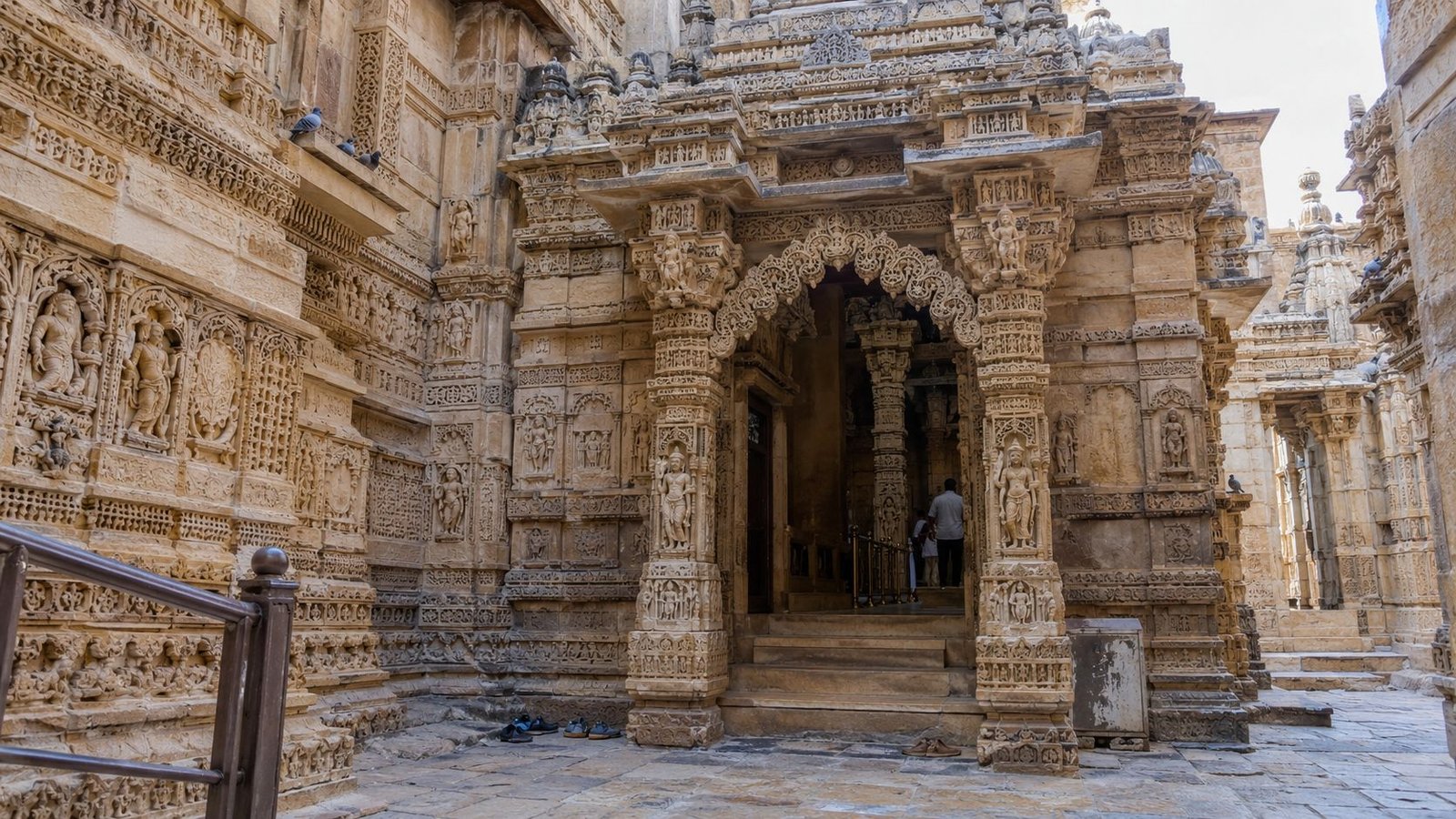
Inside the sandstone walls of Jaisalmer Fort stands a cluster of seven interconnected Jain temples. They sit away from the busier lanes of shops and havelis. Moreover, these temples rank among the finest examples of medieval Jain architecture in Rajasthan. Builders used the same golden-yellow sandstone that earned Jaisalmer its nickname, the Golden City. In fact, the stone carving is dense and precise. Therefore, visitors who look closely will notice the most detail.
For travellers exploring the Sonar Quila, the Jain temples offer a quieter, more contemplative counterpoint to the fort’s palace and market lanes. They also remain active places of worship and pilgrimage. Above all, for the Jain community of Jaisalmer, they carry centuries of religious and cultural meaning.
History of Jain Temples of Jaisalmer
The Jain temples developed alongside the fort itself. Merchant communities built much of their wealth through trade on the historic routes linking Jaisalmer with Central Asia and beyond. As these trading families prospered, many Jain merchants funded religious architecture within the fort. As a result, their support helped make Jaisalmer an important centre of Jain heritage in western Rajasthan.
One traditional account tells of Sheth Tharu Shah, a merchant who helped establish one of the temples after a vision linked to Lord Mahavira, the twenty-fourth Jain Tirthankara. However, treat this story as temple lore, not a precisely documented historical record. Therefore, this guide retells it in that spirit.
The temples likely faced damage and disruption over the centuries. The fort weathered sieges and shifting political control, as often happened in Rajasthan’s turbulent medieval history. Even so, generation after generation of the Jain community funded upkeep and restoration. As a result, that commitment preserved much of the original stonework and sculpture you can see today. Moreover, the community still maintains and uses the complex actively.
Seven Jain Temples Inside Jaisalmer Fort
The complex inside Jaisalmer Fort has seven interconnected temples. A network of passages links them, so visitors can move between temples without stepping outside. Each temple honours a different Tirthankara: Chandraprabhu, Rikhabdev (also known as Rishabhdev), Parshvanath (also called Parasnath), Shitalnath, Sambhavnath, Shantinath and Kunthunath.
Most people consider the Chandraprabhu temple the principal structure of the complex. Visitors often start there. The Parshvanath temple stands out for the detail of its carvings, which we cover below. Each of the seven temples has its own architectural character. Still, the linked layout works best when you see them as one complex, because passages join each shrine to the next.
Architecture of the Jain Temples
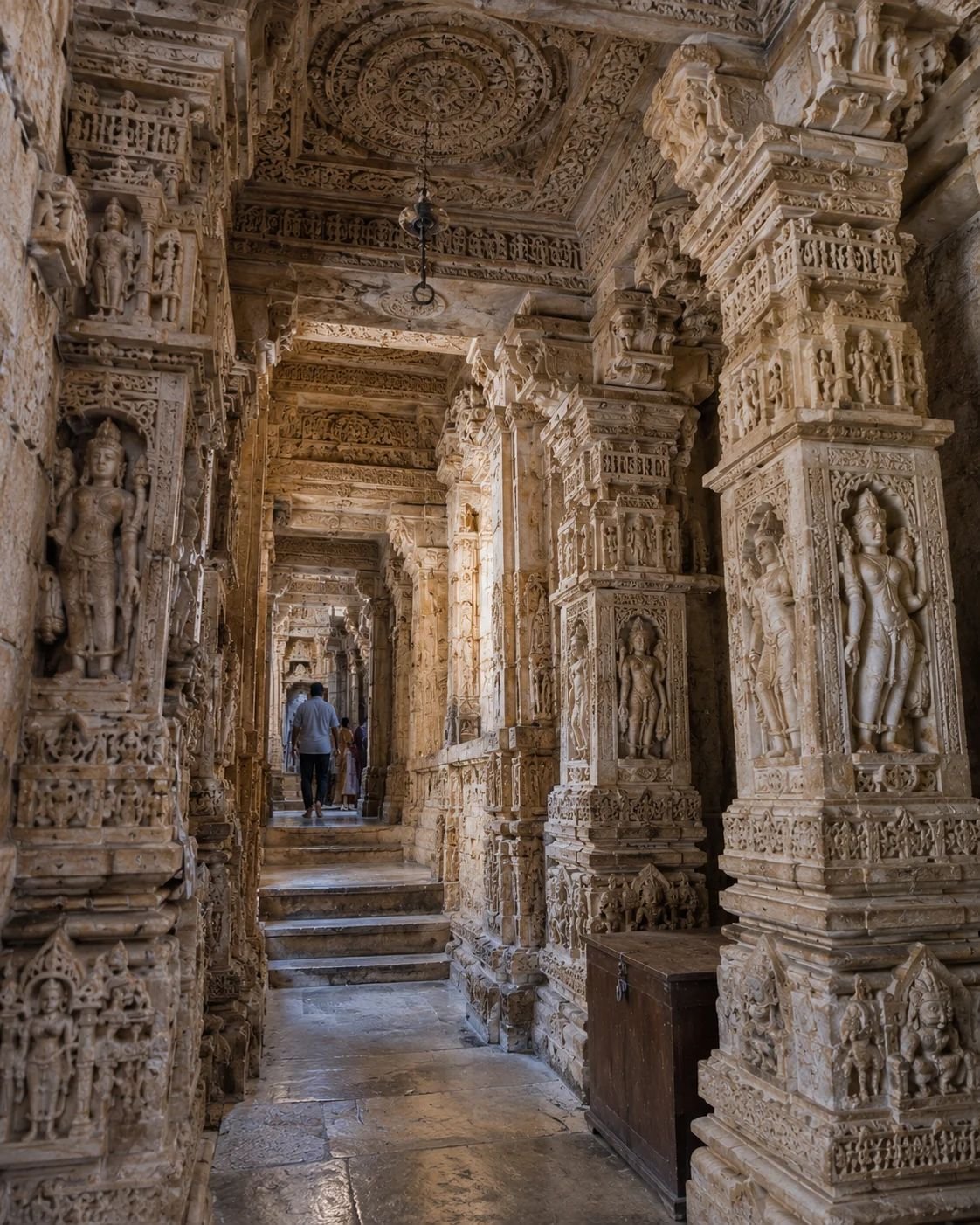
The appeal of these temples lies almost entirely in their stonework. The builders used Jaisalmer’s distinctive golden-yellow sandstone. The complex features carved entrances, ornate arches and rows of intricate pillars. In addition, these columns support equally detailed ceilings. Floral patterns, geometric motifs and celestial figures cover much of the stone. This dense ornamentation matches the wider tradition of Jain temple architecture across western India.
Sculptures and idols of the Tirthankaras stand throughout the complex. They serve as objects of worship. They also show the stone-carving skill of this region at the time of construction. The passages linking the seven shrines are an achievement too. Indeed, planners had to join several separately dedicated temples into one working complex. They did so without weakening the structure or the sanctity of any shrine.
The Parshvanath temple deserves special attention. In particular, its carvings rank among the most detailed in the complex. It houses a marble idol of Parshvanath with a serpent hood, a traditional symbol from this Tirthankara’s life story in Jain tradition. Caretakers display some artefacts behind glass to protect them, given their age and importance.

Religious and Spiritual Significance
The temples remain active centres of worship. They honour the Tirthankaras, the spiritual teachers at the heart of Jain belief. Jains understand the Tirthankaras to have attained liberation, and they guide practitioners toward the same path. For Jain visitors, the temples are sites of real pilgrimage, not just historical interest. As a result, the atmosphere inside reflects this ongoing use.
Visitors of any background will find the complex more peaceful than the commercial parts of the fort. In addition, the sculptures and carvings tell Jain religious stories and teachings visually. As a result, you can engage with the tradition’s cultural and spiritual heritage without deep knowledge of Jain philosophy.
What to See Inside the Jain Temples
Inside the complex, you will see elaborately carved entrances leading into each shrine. Also, pillared halls support detailed ceiling work. Sculptures and idols stand throughout the temples. Look closely at the passages between temples, because the carving style and detail often shift subtly as you cross from one temple to the next.
The Parshvanath temple, with its marble idol and serpent-hood carving, is generally a highlight of the visit. Some sources also mention Astapadhi temples as part of the wider complex. These structures also relate to specific forms of Jain worship and sculpture. Therefore, confirm on arrival whether you can access them. A historic religious complex may not open every part to general visitors at all times.
Best Time to Visit Jain Temples
Early morning is the best time to visit the Jain temples of Jaisalmer. You get a quieter, more contemplative experience, and visiting rules may apply later in the day. According to available information, non-Jain visitors may face restricted access to parts of the complex after noon. Therefore, arrive early if you want to see the full complex.
As for the season, November through February is generally the most comfortable time to visit Jaisalmer. As a result, cooler daytime temperatures make it easier to explore the fort and its temples without the region’s peak summer heat.
Jain Temples Jaisalmer Timings
The Jain temples stand at Fort Kothari Para, Jaisalmer, Rajasthan 345001, inside the Jaisalmer Fort complex. According to available information, they generally open from 8:00 AM to 12:00 PM. In total, a visit takes around two hours. Treat these timings as a general guide from the time of writing. Verify current hours locally before you plan your trip, since they can change.
Jain Temples Entry Fee
Entry is reportedly free for Indian visitors. However, foreign visitors pay INR 10. This figure reflects the information available at the time of writing. Verify current charges and access rules locally before you plan your trip, since they can change.
Rules and Tips for Visiting
- Remove footwear before entering the temples.
- Avoid wearing or carrying leather items, including belts, wallets and bags, in keeping with Jain religious practice.
- Do not eat or chew anything inside the temple premises.
- Keep mobile phones on silent mode throughout your visit.
- Dress respectfully, covering shoulders and legs as appropriate for a religious site.
- Do not litter anywhere within the complex.
- Follow any instructions from temple staff or caretakers.
- Be mindful and respectful of worshippers engaged in prayer or ritual activity.
How to Make the Most of Your Visit
First, arrive early. This is the most useful advice for visiting the Jain temples. You avoid access restrictions later in the day, and you see the complex in its quieter, more peaceful state. The seven temples connect, so allow a full two hours to move through without rushing. That gives you time to appreciate details that are easy to miss at a glance.
Pay attention to the small details: individual carvings on pillars, patterns in the ceilings and the sculptural work around each Tirthankara idol. Overall, this rewards you far more than a quick walk-through of the main structures.
Places to Visit Near Jain Temples
The Jain temples sit within Jaisalmer Fort, so you can combine your visit with the rest of the fort, including its palace and residential lanes. Also, UNESCO lists the fort as part of the Hill Forts of Rajasthan World Heritage site. Patwon Ki Haveli, the largest haveli complex in the old city, shows Jaisalmer’s merchant architecture outside the fort walls. Gadisar Lake offers a calmer, scenic stop in the old city, often visited around sunset.
If you have more time, visit Desert National Park and Sam Sand Dunes to see the Thar Desert landscape around Jaisalmer. Kuldhara Village, an abandoned settlement with its own local legends, is also a popular addition for those interested in the area’s lesser-known heritage sites. Together, these attractions make the Jain temples one stop in a well-rounded Jaisalmer itinerary. For official travel information, see Rajasthan Tourism.
Where to Eat Near Jain Temples
The fort’s central location puts several restaurants and cafes within reasonable reach of the Jain temples. They include Jaisalmer Oasis Restaurant, Abu Safari Restaurant, Sakura Restaurant, The Traveler’s Cup Premium Coffee Shop, Shahi Palace Rooftop Restaurant and Karma Cafe. Opening hours, pricing and availability can vary, so check current details before you plan a meal.
Why Visit the Jain Temples of Jaisalmer?
The Jain temples of Jaisalmer combine religious heritage, architectural craftsmanship and centuries of history in one compact complex inside the fort walls. Builders carved them from the fort’s signature golden sandstone. Overall, they hold some of the most detailed stonework in the city. They also show the skill of their builders and the long commitment of Jaisalmer’s Jain community to preservation. For travellers interested in Rajasthan’s layered religious and cultural history, the temples offer a quieter, more spiritual complement to the fort’s palace and busy market lanes.
Frequently Asked Questions
They stand within Jaisalmer Fort, at Fort Kothari Para, Jaisalmer, Rajasthan 345001.
The fort has seven interconnected Jain temples. They honour Chandraprabhu, Rikhabdev, Parshvanath, Shitalnath, Sambhavnath, Shantinath and Kunthunath.
People know them for their intricate sandstone carvings, interconnected architecture and role as active Jain pilgrimage sites. Most importantly, the Parshvanath temple, with its detailed marble idol, stands out.
According to available information, the temples generally open from 8:00 AM to 12:00 PM. However, verify current timings locally before you visit.
Entry is reportedly free for Indian visitors. However, foreign visitors pay INR 10. Also, confirm current fees before your visit.
Yes, non-Jain visitors can generally enter. Access to parts of the complex may be restricted after noon, so visit early in the morning.
Remove your footwear, avoid leather items and do not eat inside. Also, keep phones silent, dress respectfully and do not litter. Follow temple staff instructions and respect worshippers.