
Osian Rajasthan: Ancient Temples, History, Culture & Travel Guide
Osian Rajasthan Jaisalmer road trips often stop at a cluster of 8th- to 12th-century Hindu and Jain temples. They stand on the edge of the Thar Desert, on the road between Jodhpur and Jaisalmer.
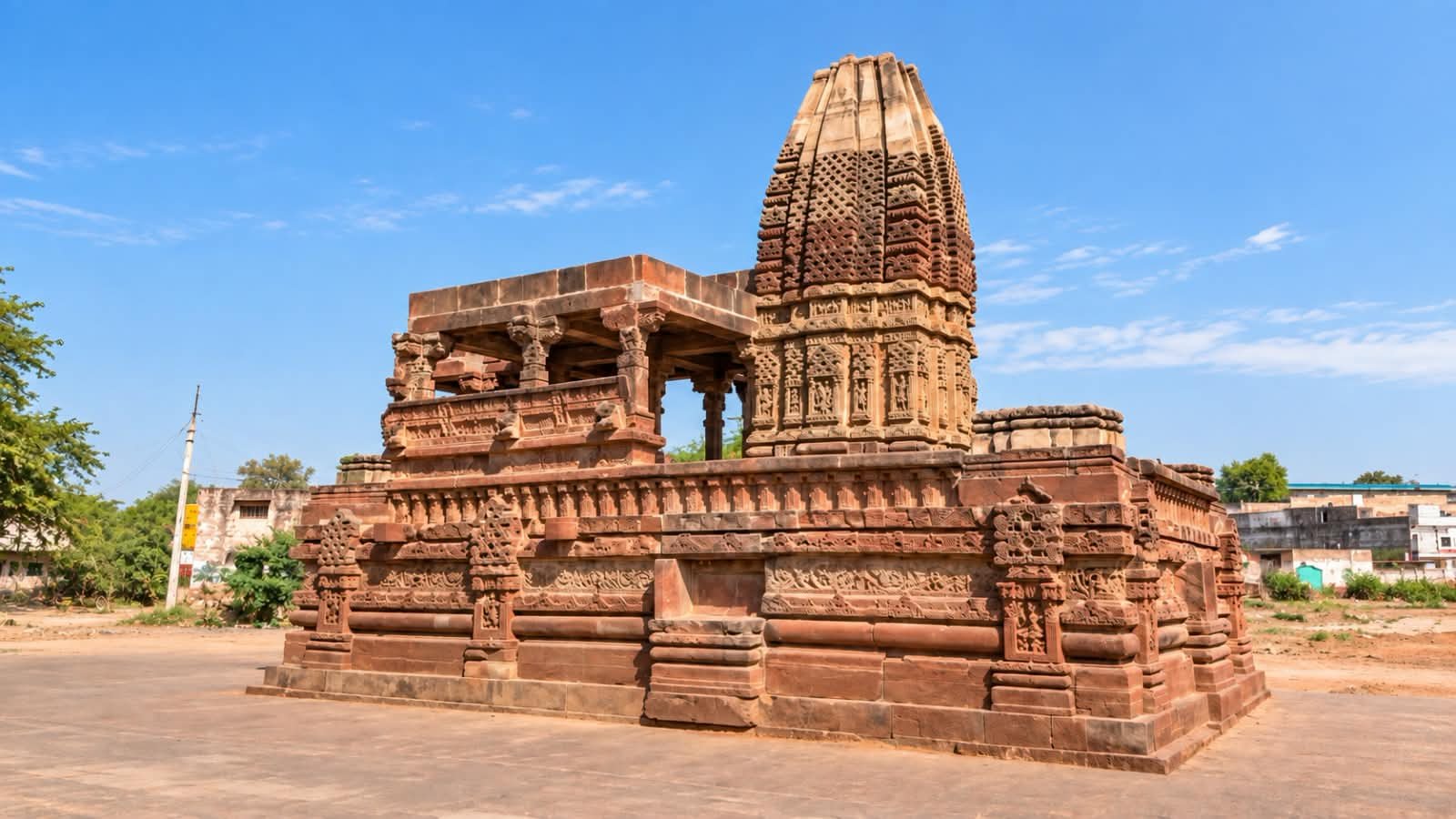
Osian Rajasthan Jaisalmer road trips often stop at Osian, a small town on the edge of the Thar Desert in Jodhpur district. The town is known chiefly for its cluster of ancient temples. These Hindu and Jain shrines date roughly from the 8th to the 12th centuries.
Some people call Osian the “Khajuraho of Rajasthan” because of the density and quality of its temple carvings. It is also one of the oldest continuously significant religious sites in this part of the state.
Travellers moving between Jodhpur and Jaisalmer can see well-preserved early medieval temple architecture here, set against desert surroundings. In addition, they can witness a still-active pilgrimage tradition centred on the goddess Sachiya Mata. Read the background on Osian for more context.
History of Osian
Early Origins and Trade
Osian’s history stretches back well over a thousand years. The settlement existed under earlier names, including Ukesa and Upkesapur, before people called it Osian. Historical evidence indicates that Osian worked as a significant trading centre from at least the Gupta period onward. Trade routes across northwestern India passed through this part of the Thar Desert, and the town benefited from that position.
The Gurjara-Pratihara Peak and Decline
The town reached its peak under the Gurjara-Pratihara dynasty, roughly from the 8th to the 12th centuries. During this time, Osian became an important centre for both Brahmanical Hinduism and Jainism. Builders raised the cluster of shrines that survive today. The earliest structures, including the Mahavira Jain Temple, date to the late 8th century.
Osian stayed prominent as a religious and trading centre for several centuries. People generally link its decline to the invasion by the forces of Muhammad of Ghor in the late 12th century. After that, Osian lost its importance as a major urban centre. However, worshippers kept maintaining and visiting its temples.
What Survives Today
Today, people recognise Osian mainly for what survives from that earlier period. Sources generally cite around 16 to 18 temple structures in varying states of preservation. Together, they form one of the more significant collections of early medieval temple architecture in Rajasthan.
Why Osian Is Important in Rajasthan
Osian holds a distinctive place in Rajasthan’s religious history. For several centuries, it served as a shared centre for both Hindu and Jain worship. You can still see this dual character in the temple complex today.
The Mahavira Jain Temple is the oldest surviving Jain temple in western India, according to most sources. As a result, Osian carries genuine historical importance for Jain pilgrimage. This matters especially for the Oswal Jain community, whose origins tradition links to Osian.
Beyond religion, the temples represent an earlier and less-visited layer of Rajasthan’s architectural heritage. They stand apart from the fort-and-palace architecture that people more commonly associate with the Rajput period.
Famous Temples in Osian
Osian’s temple cluster includes structures for multiple deities, built across different centuries. The most significant are the Sachiya Mata Temple, the Mahavira Jain Temple and the Surya (Sun) Temple.
Sachiya Mata Temple
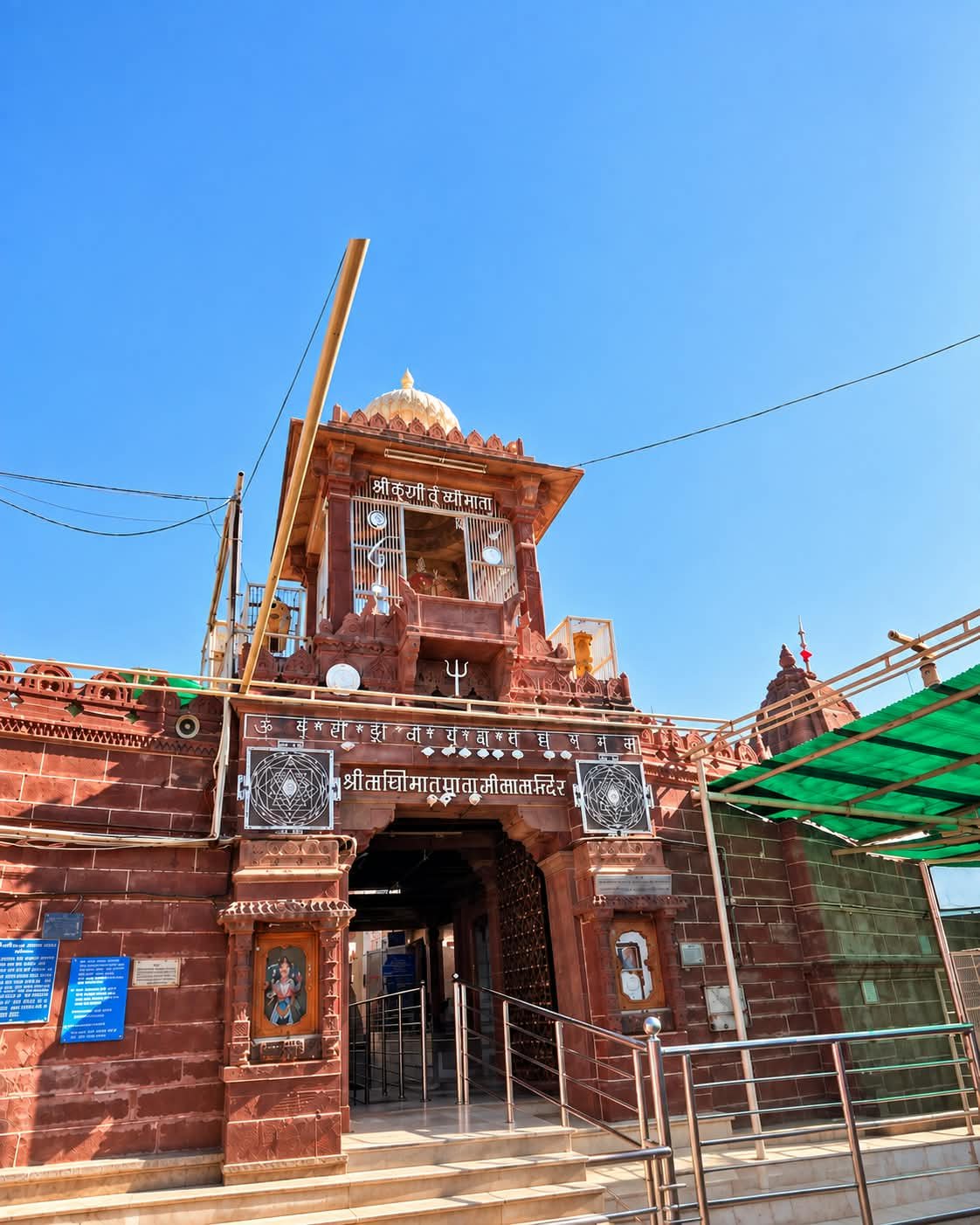
The Sachiya Mata Temple is Osian’s most visited and most actively worshipped temple today. It honours the goddess Sachiya Mata, the kuldevi, or clan goddess, of several communities across Rajasthan. Both Hindu and Jain devotees revere her.
According to devotional accounts, Sachiya Mata is linked to the goddess Sachi, wife of the deity Indra. However, the exact origin of the goddess as worshipped at Osian is part of regional religious tradition. It is not a single settled historical account.
Most sources trace the temple’s origins to the 8th century. However, the structure you see today is largely the result of later rebuilding, with most sources pointing to significant reconstruction around the 12th century. The complex includes elaborately carved halls, stone lattice screens and multiple shrines. Separate structures for the goddesses Chandi and Amba Mata stand within the same complex.
The temple remains an active site of worship and draws regular pilgrims. Therefore, approach it with the same respect you would show at any functioning place of worship. Beliefs about the goddess’s powers and blessings are a matter of religious tradition, not claims this guide can verify.
Mahavira Jain Temple
Most sources date the Mahavira Jain Temple to 783 CE, under the Gurjara-Pratihara ruler Vatsaraja. People widely regard it as the oldest surviving Jain temple in western India. It honours Lord Mahavira, the 24th Jain Tirthankara.
The temple is an important pilgrimage site for the Oswal Jain community. Jain accounts link the community’s traditional origins to Osian through the Jain teacher Ratnaprabhasuri.
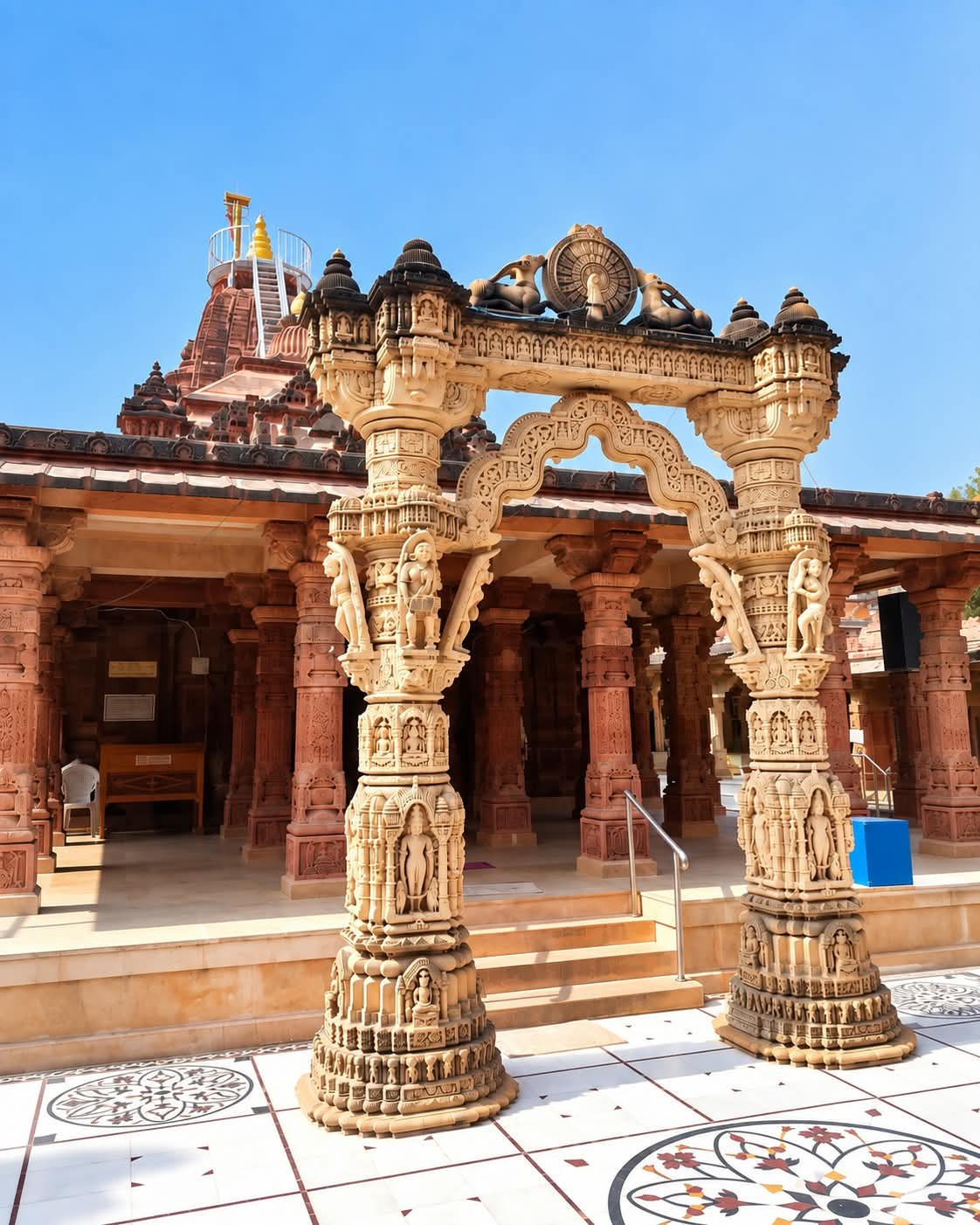
The temple stands out for its carved entrance arches, decorative toranas and finely worked pillars. Its sculptural details include elephant carvings, all cut in the local sandstone. The main shrine sits on an elevated sandstone platform. Several smaller subsidiary shrines surround it.
Sun Temple
People generally date the Surya, or Sun, Temple to around the 8th to 10th centuries. It follows the Nagara style of temple architecture, which was common in this part of India at the time. Its carvings show several other Hindu deities, including Vishnu, Ganesha and Durga, alongside its dedication to the sun god Surya.
Together with the Sachiya Mata and Mahavira temples, the Sun Temple ranks among the most architecturally significant structures in Osian’s temple cluster.
Osian’s Architecture and Ancient Sculptures
Most visitors notice the density and quality of the stone carving first. Craftsmen worked with locally quarried sandstone. Carved pillars, decorative arches, lattice screens and figural sculpture cover much of the temple exteriors and interior halls. Each structure has its own layout and decorative programme. None follows a single repeated template.
The carvings show a range of subjects. These include deities, mythological scenes, and floral and geometric patterns. The Mahavira temple’s main entrance also features carved maidens.
Builders raised these temples across several centuries. As a result, close observation reveals differences in style and construction technique. The earlier 8th-century structures differ from the later 11th- to 12th-century additions. Visitors interested in architecture get a useful comparative study within a single site.
Things to Do in Osian
- Visit the Sachiya Mata Temple, Mahavira Jain Temple and Sun Temple to see the core of Osian’s surviving temple architecture.
- Take time to examine the carved pillars, arches and sculptural panels at each temple, since the level of detail varies between structures.
- Observe the active pilgrimage atmosphere at the Sachiya Mata Temple, where local devotees continue to worship.
- Explore Osian’s surrounding desert landscape, which forms part of the wider Thar Desert environment.
- Photograph the temple exteriors, which are a significant draw for visitors. However, respect restrictions at more sensitive or actively used religious spaces.
Osian Culture, Handicrafts and Local Life
Osian is a small desert town. It reflects the wider Rajasthani rural culture of this part of Jodhpur district, including local textile and handicraft traditions. Travellers may find local markets selling regional handicrafts. However, shops, vendors and daily market activity vary, so do not assume a fixed schedule.
Religious life closely shapes Osian’s cultural character. Temple worship and seasonal festivals, more than tourism infrastructure, set the rhythm of local activity.
Festivals and Events in Osian
Osian’s temples, especially the Sachiya Mata Temple, see more pilgrims during major Hindu festivals linked to goddess worship, such as Navratri. The lunar calendar moves these festival dates every year. Therefore, check the current year’s dates through a reliable local or religious calendar. Do not assume a fixed date.
Some tourism sources also link Osian with camel-related desert activities and a camel fair tradition in the wider region. However, confirm current event details and schedules locally before you plan a trip around them. Events may not run every year.
Osian Rajasthan Jaisalmer: Distance and Travel Information
Osian lies along the general road route between Jodhpur and Jaisalmer. It is therefore a feasible stop for travellers moving between the two cities, not a separate detour.
On an Osian Rajasthan Jaisalmer road trip, people commonly describe the drive as around four hours by car. However, actual travel time depends on your route, road conditions and exact starting point in Jaisalmer. Treat this as a general guide, not an exact figure. Confirm current travel time before you plan your day.
Because of the distance, Osian suits travellers who already make the Jodhpur–Jaisalmer journey by road and can stop en route. It works less well as a standalone day trip from Jaisalmer city.
Jodhpur to Osian: How to Reach
Osian is much closer to Jodhpur. It lies roughly 65 kilometres north of the city, along the highway toward Bikaner. This shorter distance makes it a popular and practical half-day or full-day excursion for travellers based in Jodhpur.
Travellers heading onward from Jodhpur to Jaisalmer via the Phalodi route also often stop here, since Osian sits directly along that road.
Best Time for an Osian Rajasthan Jaisalmer Trip
Like much of the Thar Desert region, Osian gets extreme summer heat. Daytime temperatures regularly climb into the mid-40s Celsius between April and June. Outdoor sightseeing and temple visits are difficult in these months.
In contrast, the period from roughly October through March is far more comfortable. Cooler daytime temperatures are typical of Rajasthan’s winter season, and they suit exploring the temple complex and surrounding area.
If your visit coincides with a major festival at the Sachiya Mata Temple, expect larger crowds of pilgrims. Check current festival dates in advance, since they vary from year to year.
Tips for Visiting Osian Temples
- First, dress modestly when you visit any of Osian’s temples, especially the actively worshipped Sachiya Mata Temple.
- Remove footwear where required, and follow any posted instructions at each temple entrance.
- Respect worshippers, especially at the Sachiya Mata Temple. It remains a functioning place of active worship, not only a historical site.
- Ask before you photograph people at worship or religious ceremonies, and follow any posted photography restrictions at individual temples.
- Confirm current temple timings and entry requirements locally before your visit. This guide cannot verify a fixed current schedule.
- Wear comfortable footwear for walking on uneven stone surfaces and desert terrain.
Is Osian Worth Visiting?
Osian suits travellers with a genuine interest in early medieval temple architecture, Jain pilgrimage history, or Rajasthan’s religious heritage beyond its forts and palaces. Few other easily accessible sites in the region match its historical depth and carved detail.
The site is also fairly compact. You can finish a visit in a few hours. Therefore, it fits easily into a Jodhpur-based itinerary or an Osian Rajasthan Jaisalmer road trip. It does not need a dedicated multi-day journey.
Places to Explore Near Osian
Many travellers combine Osian with Jodhpur’s own heritage sites, given the short distance between the two. Others treat it as a stopover on the way to Jaisalmer’s major attractions. These include Jaisalmer Fort, Patwon Ki Haveli, Salim Singh Ki Haveli and Nathmal Ki Haveli.
If your plans continue further into the desert, you can also visit the Sam Sand Dunes. Many travellers also plan to see the abandoned village of Kuldhara or Desert National Park on the same westward journey.
Frequently Asked Questions
About Osian
Osian is known for its cluster of ancient Hindu and Jain temples, dating mainly from the 8th to 12th centuries. The best known are the Sachiya Mata Temple, the Mahavira Jain Temple and the Sun Temple.
Osian lies in Jodhpur district, in the Thar Desert region of Rajasthan, roughly 65 km north of Jodhpur city.
The most significant temples are the Sachiya Mata Temple, the Mahavira Jain Temple (the oldest surviving Jain temple in western India) and the Surya, or Sun, Temple.
Yes, if you enjoy early medieval temple architecture and Jain pilgrimage history. Osian is a historically significant and compact site. It fits well into a Jodhpur-based itinerary or a Jodhpur–Jaisalmer road trip.
Osian Rajasthan Jaisalmer Distance and Travel
Osian is not immediately close to Jaisalmer. It lies along the general road route between Jodhpur and Jaisalmer. People generally describe it as roughly a four-hour drive from Jaisalmer.
An Osian Rajasthan Jaisalmer drive generally takes around four hours by car. However, the exact distance and time depend on your route and starting point, so confirm current travel details before you plan.
Osian is approximately 65 km from Jodhpur. This makes it a relatively short and practical day trip from the city.
October through March brings more comfortable temperatures for visiting Osian’s temples. In contrast, the summer months from April to June bring extreme desert heat that makes sightseeing difficult.
Planning Your Visit
You can explore the main temple complex and view the detailed stone carvings and sculptures. You can also observe the active pilgrimage atmosphere at the Sachiya Mata Temple and experience the surrounding desert landscape.
Dress modestly, remove footwear where required, and respect active worship at the Sachiya Mata Temple. Also confirm current temple timings and photography rules locally before your visit.