
Pokhran Rajasthan: History, Forts, Places to Visit & Travel Guide
Pokhran, Rajasthan is a desert town on the Jodhpur–Jaisalmer road. It grew around a 14th-century Rathore fort and a royal past older than its modern fame.
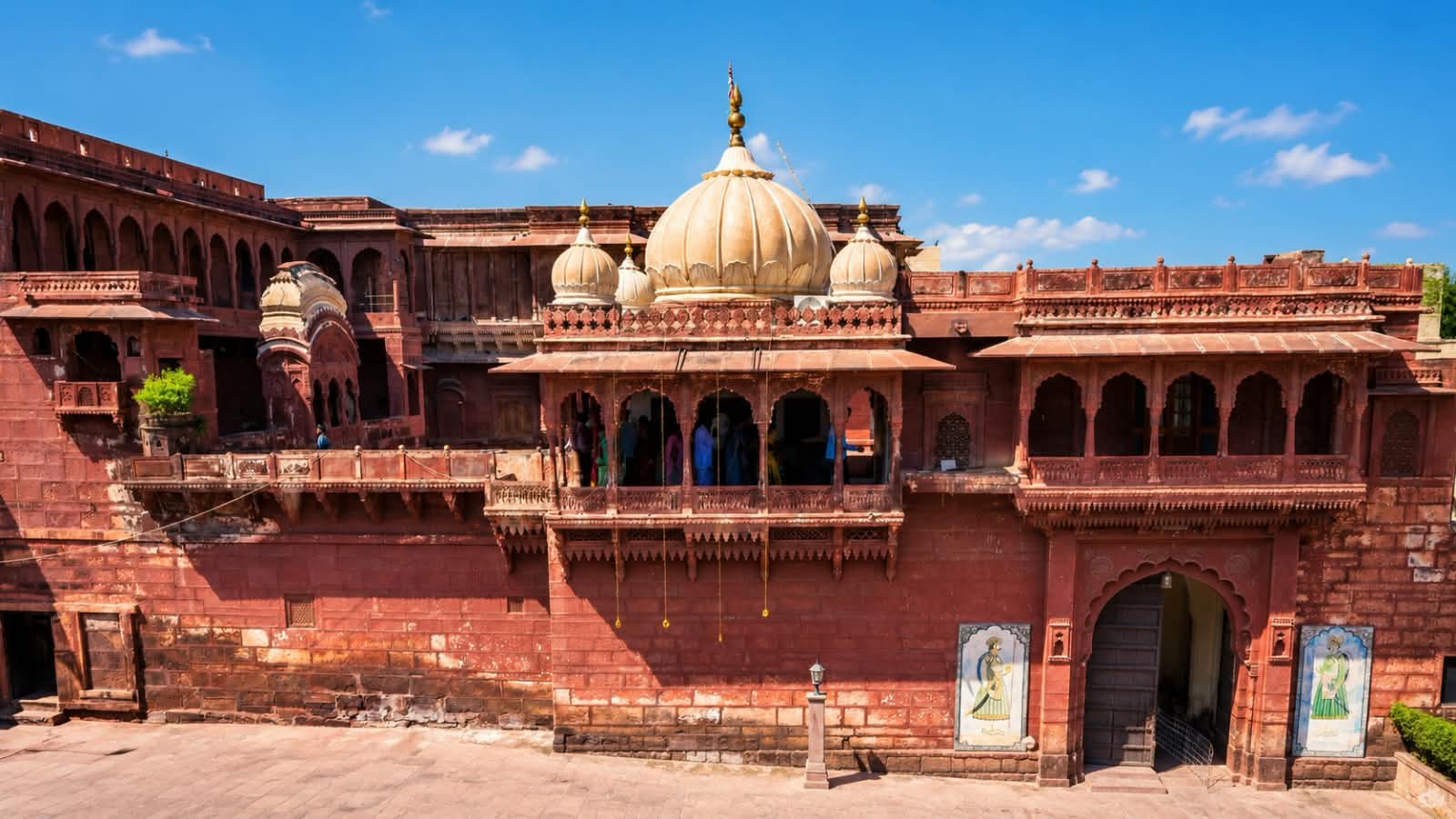
Pokhran is a small town in Jaisalmer district, Rajasthan. It sits on the road between Jodhpur and Jaisalmer, deep in the Thar Desert. Today, the world knows Pokhran as the site of India’s 1974 and 1998 nuclear tests. However, the town has an older story. It grew around Pokhran Fort, also called Balagarh, which a branch of Marwar’s Rathore clan once held.
Pokhran does not lie inside Jaisalmer city. Instead, it sits on the route between Jodhpur and Jaisalmer. As a result, Pokhran makes an easy and often overlooked heritage stop in western Rajasthan. Because of this, you do not need a separate trip to see it.
History of Pokhran, Rajasthan
Pokhran’s history as a settlement goes back centuries before the nuclear tests. Over time, the town grew along old desert trade routes. For example, traders moved spices, salt and silk through here toward Persia and beyond. As a result, Pokhran gained early importance on trade networks across the Thar Desert.
Later, the Champawat branch of the Rathore clan took control of Pokhran. The Rathores were the ruling family of the Marwar (Jodhpur) kingdom. Meanwhile, the Champawats used the fort here as an administrative and military stronghold. Locals often explain the town’s name as “the place of five mirages.” This name reflects its setting among sandy and rocky desert land.
In modern times, Pokhran, Rajasthan drew global attention as the site of India’s nuclear tests in 1974 and 1998. This guide covers that chapter later. However, for travellers, the town’s fort and royal heritage matter more.
Pokhran Fort: A Glimpse into Rajasthan’s Royal Heritage
Pokhran Fort, also called Balagarh, is the town’s main heritage attraction. Most sources date it to the 14th century. In addition, they credit Rao Maldeo, a Marwar Thakur and chief of the Champawat Rathores. However, some accounts differ slightly on the exact founding details.
Builders used local sandstone for most of the fort. Its design also blends Rajput and Mughal styles. For example, you can see this mix in the courtyards, arched porticos, jharokhas and chhatris.
The Elephant-Spike Gateway and Palace Sections
The main gate is a highlight. Large iron spikes cover it to stop charging war elephants. Similarly, many forts across Rajasthan share this defensive feature.
Inside the walls, the fort holds several palace sections. These include Phool Mahal, Rani Mahal, Hawa Mahal and Mangal Niwas. Together, they show the fort’s role as a royal home, not just a military post. Look up as you walk, because many ceilings carry fine meenakari work.
Who Looks After Pokhran Fort Today
Today, part of the fort runs as a heritage hotel. The 13th generation of the ruling family now lives in Jodhpur. Meanwhile, local caretakers look after the fort and its museum. As a result, the fort still feels like a living family home.
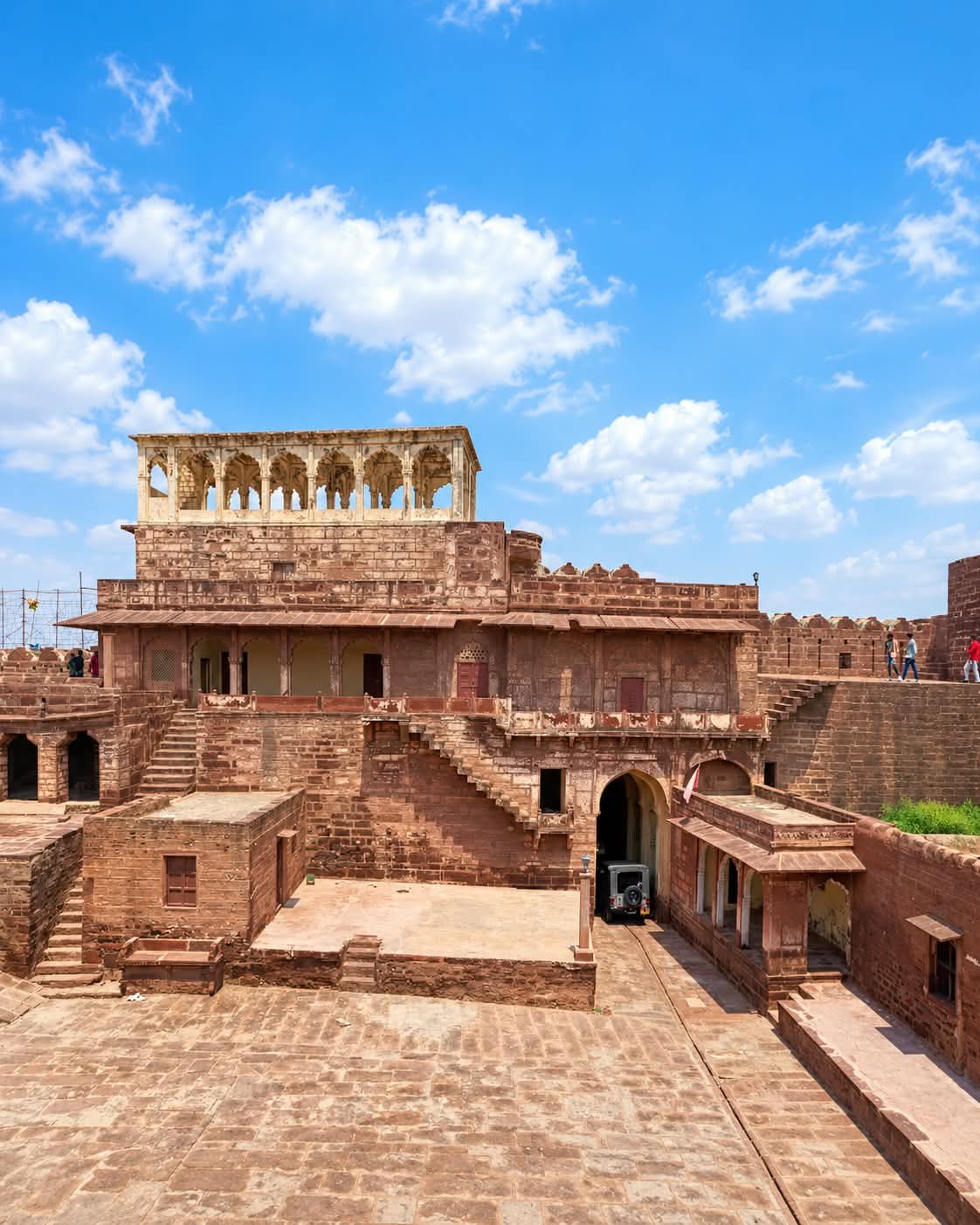
Pokhran Fort Visitor Information
- Entry fee: around ₹50 per person, paid at the ticket counter near the main gate.
- Timings: 8:00 AM to 7:30 PM.
- Last ticket: around 6:00 PM.
- Time needed: about 1.5 to 2 hours to see the fort and museum.
- Facilities: a tea and snack shop, a garden and a photo point inside the fort.
These details come from recent visitor reports. However, prices and timings can change, so it is wise to confirm before your visit.
Inside Pokhran Fort: Museum and Heritage Stay
Inside the Fort Museum
The museum fills several rooms inside the main palace area. First, you will see old weapons, including guns, swords, kripans and gunpowder flasks. The highlight is a giant sword, roughly six feet long. In addition, one wall shows portraits of twelve rulers from the Pokhran line.
Other rooms hold royal clothes, queens’ lehengas, traditional turbans and old seals. You can also see antique locks, a palanquin room and an elephant howdah. Similarly, one room displays royal utensils, including a huge thali that a whole family could share. Small cannons and piles of cannonballs sit nearby. Finally, the fort has a Radha Rani temple on the first floor and a Baba Ramdev shrine.
Staying at Pokhran Fort
Part of Pokhran Fort works as a heritage hotel with rooms, a restaurant and a garden. According to a recent guest vlog, rooms cost around ₹6,000 per night with breakfast. However, rates vary by room type and season. The hotel area stays private, so day visitors cannot enter guest rooms. During the busy winter season, rooms often sell out. Therefore, book well in advance if you want to stay.
Phool Mahal: Royal Heritage of Pokhran, Rajasthan
Phool Mahal is one of the historic palace sections inside Pokhran Fort, Rajasthan. It belongs to the fort’s royal living quarters, along with Rani Mahal, Hawa Mahal and Mangal Niwas. Its Rajput design, ornate details and historic setting also reflect the fort’s royal past.
The palace interiors and decorative features offer a glimpse into the lives of Rajasthan’s ruling families. Moreover, they show the skill of local craftsmen. Because part of the fort works as a hotel, access to some palace sections may vary. So, if you want to see Phool Mahal, ask at the ticket counter.

Pokhran’s Cultural Heritage and Local Life
Pokhran has the everyday culture of rural western Rajasthan. For instance, local sources mention weaving and pottery traditions in the area. These crafts belong to the wider handicraft culture of Jaisalmer district and the Thar region. However, artisans and markets change over time, so ask locally about what is open during your visit.
Overall, life in Pokhran follows the rhythm of the desert. In fact, the town’s place on the Jodhpur–Jaisalmer corridor shapes it more than organised tourism does.
Things to Do in Pokhran, Rajasthan
- Visit Pokhran Fort (Balagarh) to see its sandstone architecture, courtyards and palace sections.
- Explore the fort museum, home to a six-foot sword, royal costumes and old weapons.
- Spot the mix of Rajput and Mughal styles in the gateways, jharokhas and chhatris.
- Photograph the fort’s striking exterior, a favourite with passing travellers.
- Stay a night in the fort’s heritage hotel for a royal experience.
- Enjoy the open Thar Desert landscape along the Jodhpur–Jaisalmer road.
- Finally, try regional Rajasthani food at local eateries on your way through.
Pokhran, Rajasthan and the Thar Desert Landscape
Pokhran sits in the dry expanse of the Thar Desert. In fact, much of a visit here is about the setting itself. Sandy and rocky terrain surrounds the town, rather than one standout natural feature. Similarly, the road from Jodhpur or Jaisalmer passes desert scenery, small villages and open stretches of land.
Sam Sand Dunes near Jaisalmer offers organised desert camps and dune activities. In contrast, Pokhran does not have this kind of tourism setup. For example, you will not find camel safaris or overnight desert camps here. So, if you want that experience, plan it separately, closer to Jaisalmer.
Pokhran’s Nuclear Test History
India carried out underground nuclear tests near Pokhran in 1974 and again in 1998. These events marked key moments in the country’s scientific and strategic history. You can read more about the 1974 test and the 1998 tests on Wikipedia. However, this guide keeps the topic brief, because it relates to national security.
For travellers, this history is part of Pokhran’s modern identity, not a sightseeing attraction. Instead, the fort and royal heritage remain the best reasons to visit.
How to Reach Pokhran, Rajasthan
Pokhran is easy to reach by train, bus or car. Because it sits on the Jodhpur–Jaisalmer route, travel stays simple from either city.
- By train: Pokaran railway station (code POK) lies on the Jodhpur–Jaisalmer line. Regular trains link it with Jodhpur, Jaisalmer and cities such as Ahmedabad and Delhi. Check schedules and book on IRCTC.
- By bus: State and private buses run between Jodhpur, Jaisalmer and Pokhran. You can check government bus routes on the RSRTC website.
- By taxi or car: Taxis are easy to book in Jaisalmer and Jodhpur. Also, a private car lets you combine Pokhran with nearby stops.
- By air: Jaisalmer Airport is the closest, about 115 km away by road, but it has fewer flights. Instead, Jodhpur Airport, around 175 km away, offers more connections.
Jaisalmer to Pokhran: Distance and Travel Information
Pokhran lies on the main road between Jaisalmer and Jodhpur. Most sources put it about 90 to 110 kilometres from Jaisalmer by road. Usually, the drive takes one and a half to two hours. However, time depends on your route and starting point in Jaisalmer city. As a result, Pokhran makes an easy day trip or detour from Jaisalmer. It suits travellers who enjoy Rajasthan’s fort architecture, and you won’t need an overnight stay.
Jodhpur to Pokhran: How to Reach
Pokhran is farther from Jodhpur, at roughly 180 kilometres by road. Therefore, it makes a long day trip from Jodhpur alone. Instead, most visitors stop here while driving the full Jodhpur–Jaisalmer route. Many also combine Pokhran Fort with other stops, such as Osian. Also, expect several check posts and speed checks on this highway. So, always drive within the posted speed limit.
Best Time to Visit Pokhran, Rajasthan
Like the rest of the Thar Desert, Pokhran, Rajasthan has an extreme climate. In summer, days get very hot, so outdoor sightseeing becomes uncomfortable. The monsoon brings little relief, because the region gets low rainfall. Therefore, October to March is the most comfortable time to visit. During these months, cooler days make it easier to explore the fort and town on foot. Outside winter, however, plan visits for early morning or late afternoon rather than midday.
Places to Visit Near Pokhran, Rajasthan
Pokhran sits on the Jodhpur–Jaisalmer road, so it fits well into a trip between the two cities. For example, nearby Ramdevra is an important pilgrimage town linked to the folk saint Baba Ramdevji. Its well-known Ramdevra Temple also draws many visitors travelling through Jaisalmer district. Heading on to Jaisalmer? Then combine Pokhran with Jaisalmer Fort, Sam Sand Dunes and the abandoned village of Kuldhara. Similarly, from Jodhpur you can stop at the ancient temple complex of Osian on the same route. For more trip ideas, visit Rajasthan Tourism or the Incredible India page on Pokhran.
Is Pokhran, Rajasthan Worth Visiting?
Pokhran Fort is a worthwhile stop if you enjoy Rajasthan’s fort architecture or Rathore history. It also suits travellers curious about old desert trade towns. Because the fort sits right on the Jodhpur–Jaisalmer route, it adds little extra travel time. Besides, the museum and low entry fee make it good value. However, Pokhran is a modest desert town, not a major tourist hub. So, if you want desert camps and dunes, Sam Sand Dunes is a better choice.
Frequently Asked Questions
Pokhran is famous for Pokhran Fort, a 14th-century fort linked to Marwar’s Rathore clan. In addition, modern history links the town to India’s 1974 and 1998 nuclear tests.
Pokhran lies in Jaisalmer district, Rajasthan, on the road between Jodhpur and Jaisalmer. However, it is a separate town from Jaisalmer city.
Pokhran Fort opens from 8:00 AM to 7:30 PM, with last tickets around 6:00 PM. Entry costs about ₹50 per person.
Yes. Part of the fort runs as a heritage hotel. Rooms cost around ₹6,000 per night with breakfast, depending on room type and season.
Yes, if you enjoy Rajasthani forts and history. Pokhran Fort makes a good stop, especially on the Jodhpur–Jaisalmer road.
Pokhran Fort (Balagarh) is the main attraction. Its palace sections also include Phool Mahal, Rani Mahal and Hawa Mahal.
The fort stands out for its 14th-century sandstone architecture, which blends Rajput and Mughal styles. Visitors also love its elephant-spike gateway and its museum, home to a six-foot royal sword.
Phool Mahal is one of the palace sections inside Pokhran Fort. Its ornate design also reflects the decorative Rajput palace style.
Yes. Pokaran railway station (POK) lies on the Jodhpur–Jaisalmer line. Regular trains connect it with both cities.
Pokhran is about 90 to 110 kilometres from Jaisalmer by road. Usually, the drive takes roughly one and a half to two hours.
Pokhran is roughly 180 kilometres from Jodhpur by road. Therefore, it is a longer trip than from Jaisalmer.
October to March is the best time to visit Pokhran, Rajasthan. In contrast, summer heat makes outdoor sightseeing difficult.
Yes. Pokhran is close enough to Jaisalmer for a day trip or a short detour. Because of this, it suits travellers who enjoy fort architecture and royal history.